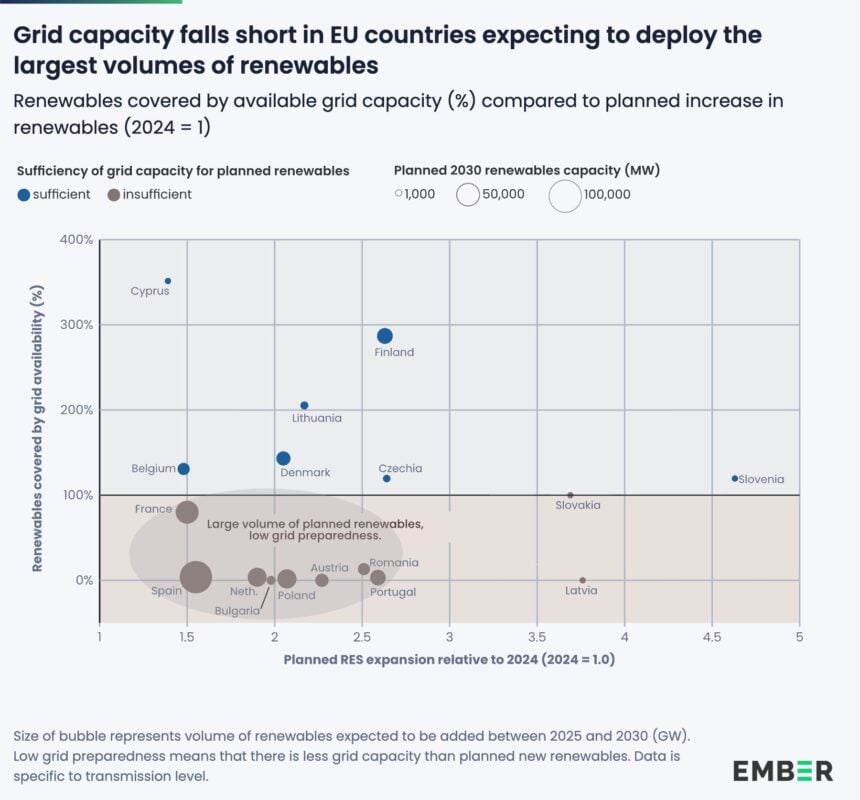
In its analysis, Ember examined grid capacity across 20 EU countries and found the major gap was at the transmission level, with a possible shortfall of 104 GW that would affect utility-scale solar projects.
Why it matters: Forces solar installers to pivot from simple installation to complex grid-integration experts.
This is the single biggest bottleneck for European solar growth
The Ember report confirms what installers from Germany to Greece have been experiencing firsthand: the grid is becoming the primary constraint, not customer demand or panel supply. For solar businesses, this means the era of simply selling and installing systems is over. The new challenge is navigating grid access, which varies wildly between regions like Spain's saturated networks and Eastern Europe's underdeveloped infrastructure.
Market implications are profound: We're seeing a shift from a pure volume game to a value and location game. Projects in grid-congested areas face multi-year connection queues, while regions with capacity become premium development zones. This will accelerate the trend toward hybrid projects (solar+storage) and behind-the-meter commercial installations that bypass grid constraints. It also gives a competitive edge to installers with strong grid operator relationships and sophisticated site assessment capabilities.
What solar businesses should watch: First, monitor your national grid operator's capacity maps religiously—they're becoming the new prospecting tools. Second, diversify into storage solutions immediately; they're no longer optional upgrades but essential grid integration components. Third, consider partnerships with flexibility aggregators who can monetize constrained generation. Finally, prepare clients for longer project timelines and educate them on the grid reality—managing expectations is now part of the sales process.