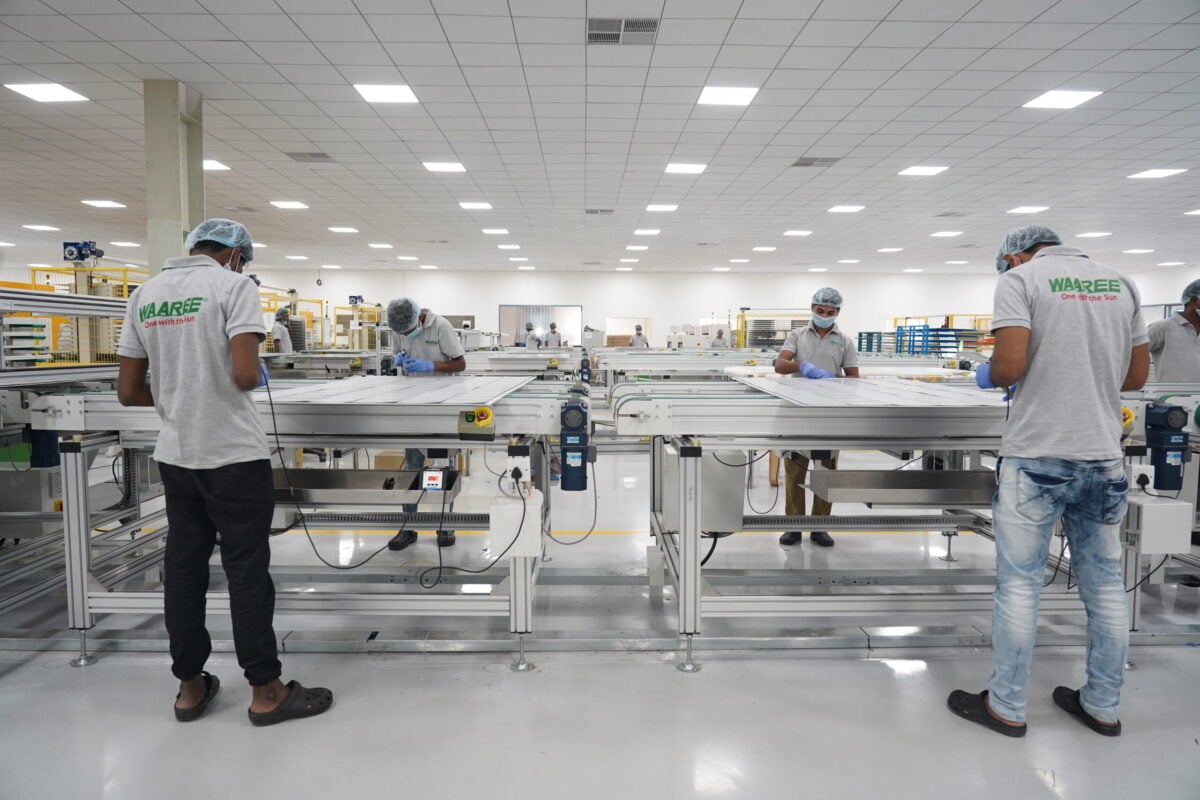
Sangam Solar One, a subsidiary of Indian solar PV manufacturer Waaree Energies, has commissioned a 3GW PV module manufacturing facility in Samakhiali, Kutch, Gujarat.
Why it matters: Expands non-Chinese module supply, increasing procurement options and potential for cost competition.
This isn't just another factory opening; it's a significant escalation in the global supply chain battle that directly impacts European installers' bottom lines. Waaree, already a major player, is aggressively scaling to compete with Chinese giants like Jinko and Longi on volume. For European businesses, this means more competition in the mid-to-low-cost module segment, potentially driving down purchase prices for standard panels.
The EU's Supply Chain Dilemma
While the EU pushes for domestic manufacturing through the Net-Zero Industry Act, the reality is that price remains king for most residential and commercial projects. Indian manufacturers like Waaree, Tata, and Adani are positioning themselves as a strategic alternative to Chinese dominance, often with better geopolitical optics. They benefit from government production-linked incentive (PLI) schemes, giving them a cost edge that European factories struggle to match. This creates a three-way tug-of-war for installers: Chinese price, Indian value, or European sovereignty.
What Solar Businesses Should Watch
Pricing Pressure: Expect increased competition in tender bids where Waaree modules are specified. This could squeeze margins for installers who don't adapt their procurement strategy.
Quality Perception: Track the performance and warranty claims of this new production line. Indian manufacturing quality has improved, but consistency across massive new capacity is key.
Logistics & Lead Times: A 3GW plant adds substantial volume to global shipping lanes. Monitor port congestion and freight costs from India, which could affect project timelines.
The 'China+1' Strategy: Many European developers are mandating non-Chinese supply for ESG reasons. Waaree's expansion makes them a prime beneficiary. Installers should familiarize themselves with their product certifications and bankability ratings to leverage this trend in client proposals.