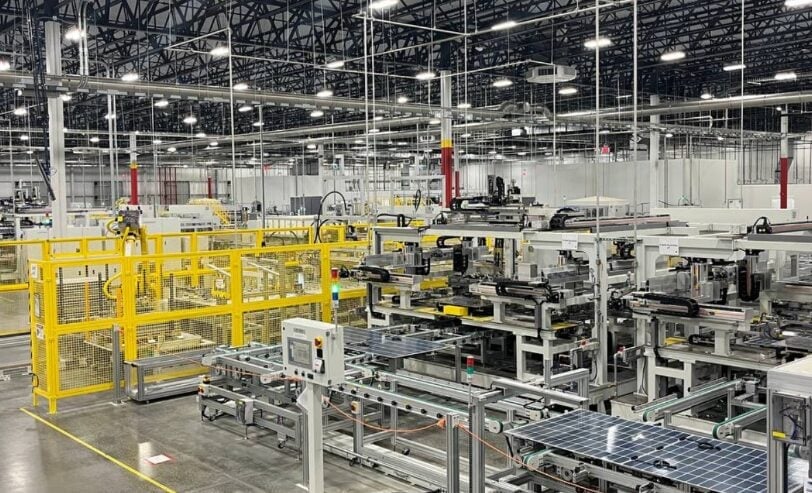
Following a significant downturn in 2023, capital expenditure (capex) in photovoltaic manufacturing is poised for a notable recovery this year, with growth extending well beyond China's dominant production base. This resurgence signals a pivotal shift in the global supply chain landscape, a development of critical importance for European solar installers and project developers who are navigating a market increasingly focused on supply diversification and energy security.
A Broader Geographical Investment Landscape
The anticipated capex rebound is not confined to a single region. While China remains the undisputed leader in solar manufacturing capacity, substantial new investments are being channeled into the United States and India. This trend is largely driven by targeted policy frameworks, such as the U.S. Inflation Reduction Act and India's Production Linked Incentive (PLI) scheme, which are designed to build domestic manufacturing ecosystems. For European stakeholders, this geographical diversification presents both a challenge and an opportunity. It could lead to a more resilient and competitive global supply chain, potentially mitigating the risks associated with over-reliance on one region. However, it also means navigating a more complex international trade environment and understanding the technical specifications of modules from emerging production hubs.
Implications for the European Solar Sector
The influx of capital into manufacturing in the US and India holds direct consequences for the European market. Firstly, it could gradually alter import dynamics, offering new sourcing options that may align with evolving sustainability and traceability requirements. Secondly, this global investment wave underscores the intense competition and rapid technological advancement in solar manufacturing, which typically drives down module prices and improves efficiency over time. European businesses must stay informed on these trends to make cost-effective procurement decisions. Furthermore, this global capex surge highlights the contrast with Europe's own ambitions to revitalise its solar manufacturing sector through initiatives like the Net-Zero Industry Act. The scale of investment elsewhere sets a high benchmark for the level of support and speed required to make European production globally competitive.
In conclusion, the rebound in global PV manufacturing investment marks a strategic inflection point. For European solar professionals, the key takeaway is the accelerated move towards a multipolar supply chain. Success will depend on agile supply chain management, a deep understanding of evolving product landscapes from new manufacturing regions, and strategic advocacy for policies that ensure the European market can both benefit from global diversification and build its own industrial capabilities. The coming years will be defined by how well the industry adapts to this new, more geographically distributed manufacturing reality.