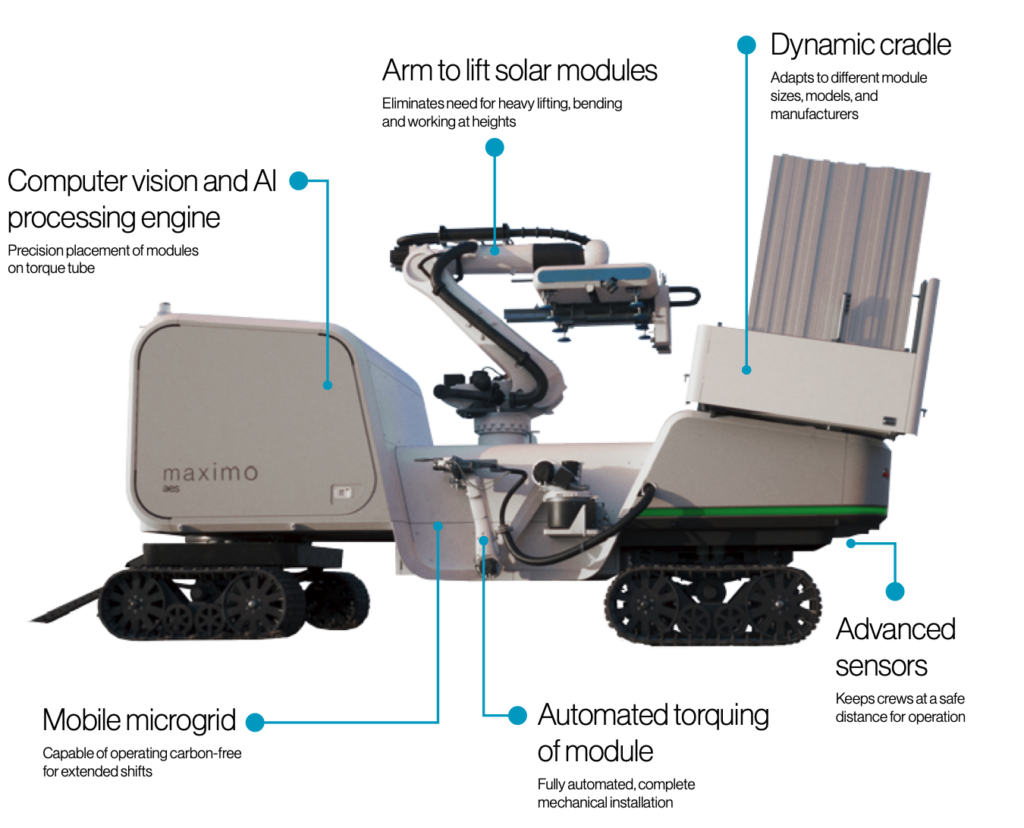
Cuatro robots versión 3.0 han operado en paralelo en el proyecto Bellefield, integrados en los flujos convencionales de construcción junto a técnicos especializados, y han instalado más de un módulo por minuto, frente a los 24 módulos que, com máximo, puede instalar operario por hora.
Why it matters: Prepare for robotic automation to reshape large-scale project economics and labor strategies within two years.
Why This Matters for European Solar Installers
This isn't just a US story—it's a warning shot across the bow of every European solar installation business. When robots can install 60+ modules per hour versus a human's maximum of 24, the economics of large-scale projects fundamentally change. For EU installers facing chronic skilled labor shortages and intense price competition, automation is no longer theoretical.
Market Context & Implications
The European market is particularly vulnerable to this shift. We have higher labor costs than the US, stricter safety regulations that robots could navigate more consistently, and massive utility-scale pipelines in Spain, Germany, and Italy. The "integrated workflow" mentioned is key—these aren't replacing entire crews, but augmenting them. This mirrors what we're seeing with drone surveying and layout software in the EU already. The pressure will come first on large ground-mount EPCs, then trickle down to commercial rooftop specialists.
What Solar Businesses Should Watch For
My prediction: We'll see the first 50MW+ EU project using similar robotics within 24 months, likely in the Spanish market where labor shortages are acute and terrain is suitable. This isn't about job elimination—it's about productivity survival in a market where margins are already razor-thin.