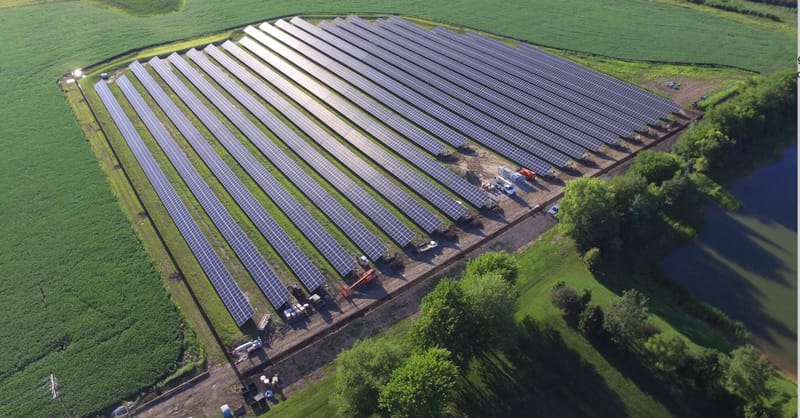
ComEd is tapping a rarely used technique to fast-track community solar installations — working with, not against, environmental groups and solar project developers. For years, utilities have explored the concept of flexible interconnection, in which solar projects are allowed to come online even when the grid is constrained.
Why it matters: Adopt flexible interconnection strategies now to bypass grid queues and accelerate your project pipeline before competitors catch on.
Breaking the Interconnection Bottleneck
For European installers, the 'grid queue' is currently the single biggest inhibitor to growth. While this news hails from Illinois, the underlying mechanism—flexible interconnection—is the exact policy shift needed to unlock stalled residential and commercial projects across the EU.
Why This Matters for EU Installers
Market Context and Strategic Implications
The traditional European utility model relies on 'firm' capacity, which is increasingly incompatible with the rapid pace of decentralized energy deployment. ComEd’s approach proves that utilities can mitigate grid stress through software-driven management rather than physical infrastructure upgrades alone. In markets like Germany or Italy, where grid congestion is reaching a breaking point, this shift could be the catalyst for a new wave of community solar projects.
What Businesses Should Watch For
Solar business owners should monitor local DNO (Distribution Network Operator) pilot programs involving dynamic curtailment. If your regional grid operator begins offering 'non-firm' or 'flexible' connection offers, do not shy away from them. While they require more sophisticated energy management systems (EMS) to handle potential curtailment, they represent the only viable path to clearing your project backlog in the next 24 months. Position your firm as an expert in smart-grid integration to stay ahead of the curve.