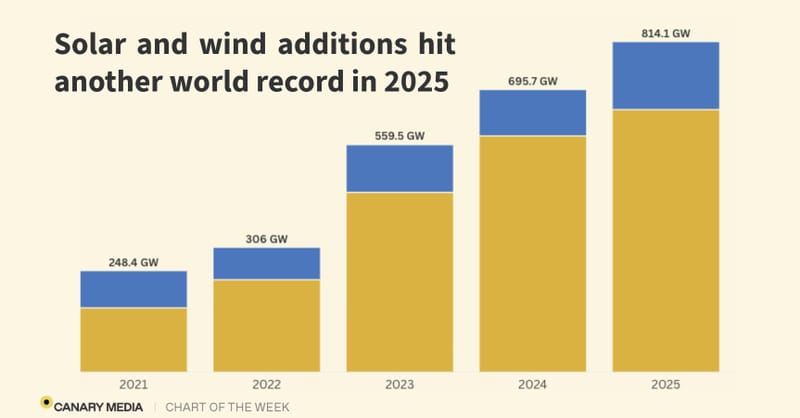
Yet again, a record amount of new solar and wind capacity came online globally last year, according to the latest numbers by think tank Ember.
Why it matters: Pivot your business from selling commodity panels to offering integrated energy management solutions to capture higher margins in a saturated market.
The Oversupply Paradox
While global record-breaking capacity is a victory for the energy transition, European solar installers are currently navigating a complex aftermath. The surge in deployment is fueling a manufacturing glut, leading to historically low module prices. For the average installer, this is a double-edged sword: lower COGS (Cost of Goods Sold) makes residential and commercial quotes more competitive, but it also compresses margins if you aren't aggressively managing your procurement strategy.
Market Context: The Shift to Flexibility
The Ember data confirms that the bottleneck is no longer project generation—it is grid integration and storage. As the grid becomes saturated with intermittent solar power, the 'low-hanging fruit' of simple rooftop PV is transitioning toward a 'Solar + Storage' standard. If your business is still selling stand-alone PV systems without a robust battery integration strategy, you are leaving significant value on the table and failing to solve the grid-congestion anxiety felt by many homeowners.
Strategic Outlook for Installers
The market is moving from a 'build-as-much-as-possible' phase to a 'smart-integration' phase. Those who pivot their service offering now will thrive as the market matures.