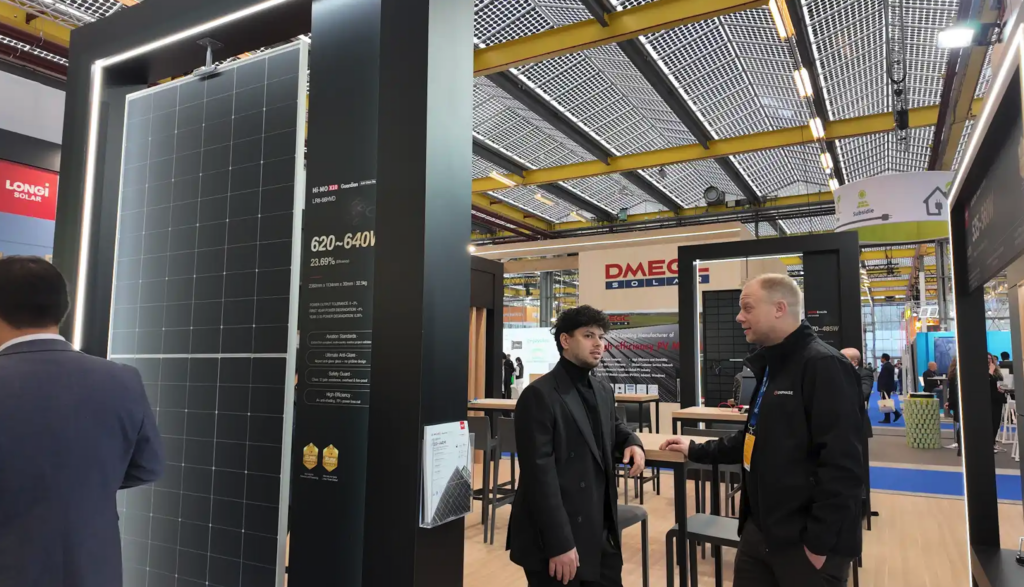
El módulo combina vidrio microestructurado con una arquitectura de celdas de contacto en la parte posterior para dispersar la luz reflejada y aumentar el rendimiento lumínico.
Why it matters: Enables installers to boost project ROI in Northern Europe's challenging low-light climates.
This isn't just another efficiency bump; it's a direct answer to the core challenge of Northern European solar economics. For installers in Germany, the UK, Benelux, and Scandinavia, system yield in diffuse and low-light conditions is the single biggest determinant of customer ROI. Longi is targeting the Achilles' heel of standard PERC and TOPCon modules in our markets.
Market Context: The Yield War Moves Beyond the Datasheet
The European premium segment is no longer just about peak watt ratings. It's about real-world energy harvest, especially during long mornings, evenings, and overcast winters. This move by Longi signals a shift from competing solely on €/Wp to competing on €/kWh generated. It pressures other tier-1 manufacturers to follow suit with similar light-capture technologies or risk losing specification on high-value residential and commercial projects where every kilowatt-hour counts.
What Installers Should Watch
1. Specification Sheets: Demand detailed performance data under low irradiance (200-400 W/m²) and diffuse light. Compare this against standard modules. The value proposition must be quantifiable for your customers.
2. Pricing Premium: How much more will this glass and cell architecture cost? The premium must be justified by a clear boost in annual energy yield, especially for north-facing roofs or shaded arrays.
3. Competitor Response: Expect Jinko, Trina, and JA Solar to announce similar anti-reflective or light-harvesting features within the next 6-12 months. This will become a standard feature in the premium segment.
For savvy installers, this technology provides a powerful new tool for system design—optimizing yields on sub-optimal roofs and strengthening the financial case for solar in regions with less-than-ideal insolation.