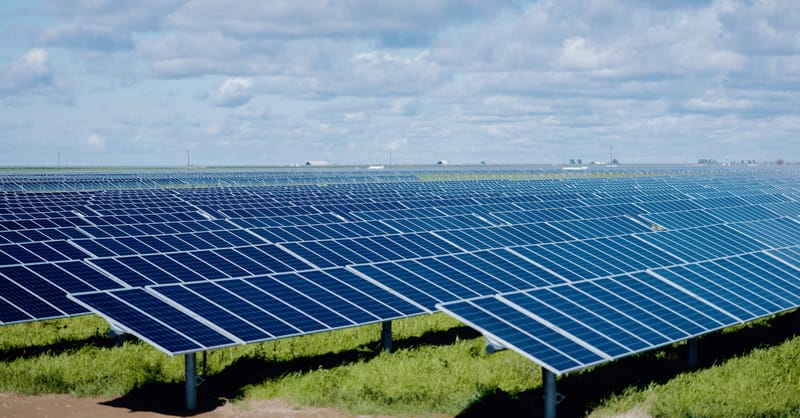
Harris Ranch Resort isn’t close to much. Residents of California’s major cities know it mainly as a rest stop about halfway between Los Angeles and San Francisco on Interstate 5’s long run through the San Joaquin Valley.
Why it matters: Pivot your business model toward hybrid commercial projects and agrivoltaics to bypass the looming grid-connection bottlenecks currently stalling pure-play residential growth.
The Utility-Scale vs. C&I Tug-of-War
While this project highlights the sheer scale of American solar development in the San Joaquin Valley, European installers should look past the headline to the underlying shift in land use and grid integration. In Europe, we are increasingly constrained by permitting gridlock, making the 'co-location' model—where solar infrastructure shares space with existing commercial or agricultural operations—the gold standard for project viability.
Why This Matters for EU Installers
The California model demonstrates that massive solar deployment is no longer confined to remote, unpopulated deserts. Instead, it is becoming hyper-integrated with existing infrastructure. For European installers, this reinforces a critical trend: the future of the market is not just residential rooftops, but the 'agrivoltaics' and 'commercial-plus' sectors. As grid congestion becomes the primary bottleneck in Germany, Italy, and Spain, installers who can package solar with storage and local load management—much like the Harris Ranch project—will command higher margins.
Strategic Market Implications
Keep a close watch on how European grid operators start to incentivize 'self-consumption' clusters. The businesses that build these localized, grid-stabilizing ecosystems will be the ones that dominate the 2025-2030 market cycle.