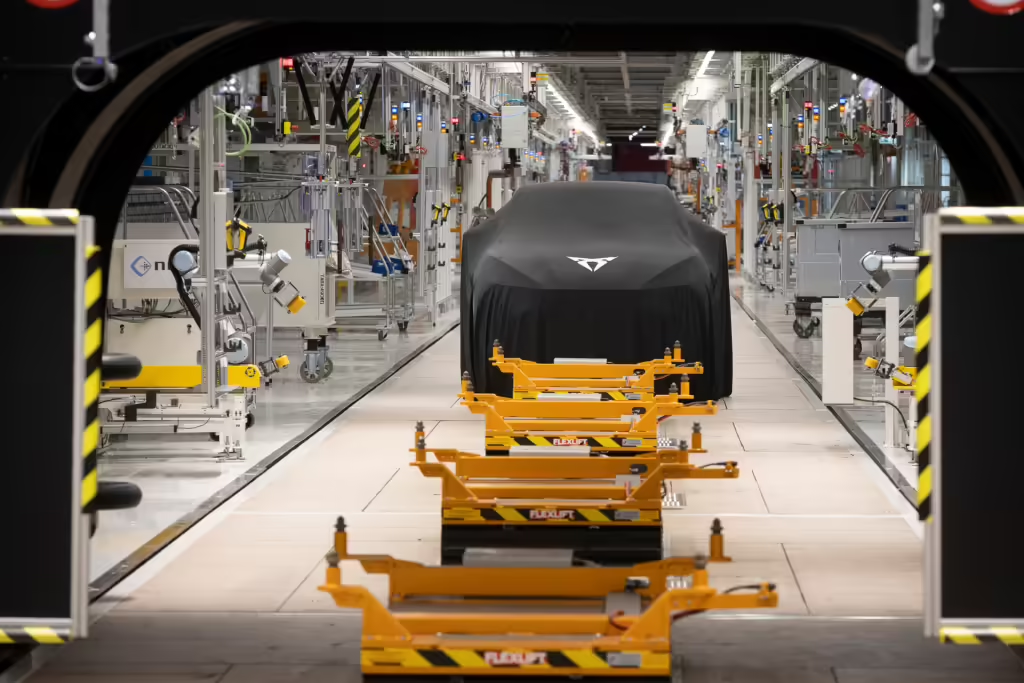
Seat & Cupra ha iniciado la producción en serie de sistemas de baterías en su planta de Martorell que utilizarán el modelo eléctrico urbano Cupra Raval y el futuro Volkswagen ID Polo.
Why it matters: Prepares solar installers for coming price drops and new opportunities in second-life EV battery storage systems.
This isn't just car news—it's a direct signal to the European energy storage market. SEAT's investment in cell-to-pack battery production in Martorell represents a major scaling of Spanish battery manufacturing capacity. For solar installers, this means the domestic supply chain for stationary storage is about to get more competitive and potentially more affordable.
Why This Matters for Solar Businesses
The automotive industry's push into localized battery production creates a crucial secondary market: repurposed EV batteries for stationary storage. As these vehicles reach end-of-life in 5-10 years, a flood of second-life battery modules will enter the market. European installers who understand battery chemistry and BMS integration will be positioned to capitalize on this emerging circular economy.
Market Implications
Solar businesses should watch for partnerships between automakers and energy companies. Volkswagen Group (which owns SEAT) has already shown interest in vehicle-to-grid technology. The Raval and ID.2all platforms could become testbeds for bidirectional charging, creating new revenue streams for solar+storage+EV installations.