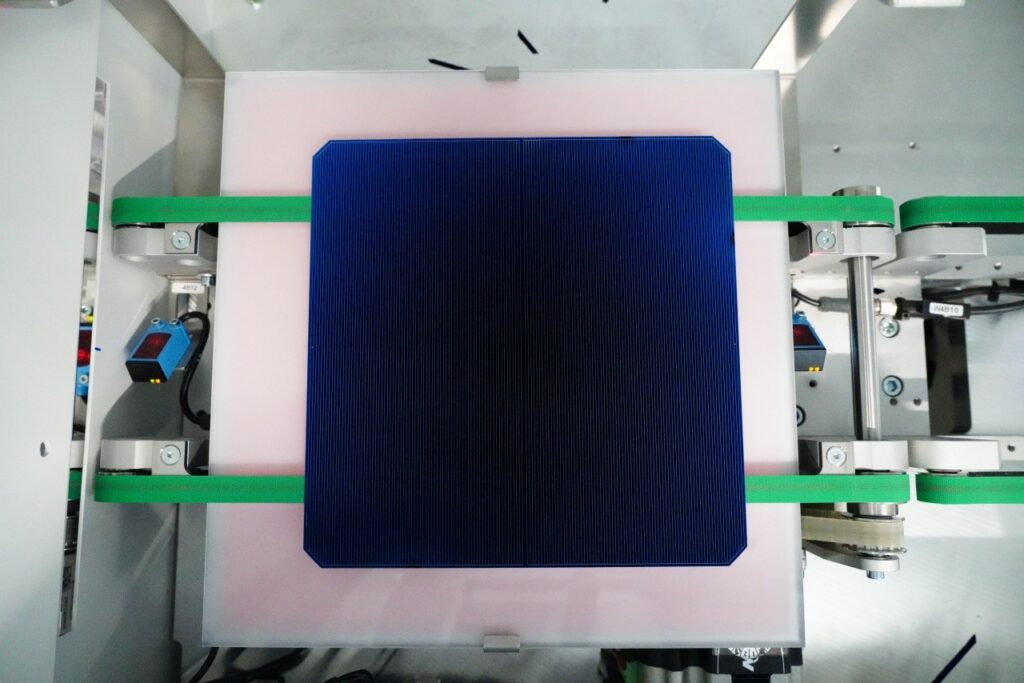
la inversión anual en equipos para la producción fotovoltaica aumentará de 16.600 millones de dólares en 2025 a 43.800 millones en 2035.
Why it matters: Expect a bifurcated supply chain with premium European-made products alongside ultra-low-cost imports, forcing strategic supplier decisions.
This forecast of tripling manufacturing CAPEX is the clearest signal yet that the global solar industry is entering its next major phase: massive vertical integration and supply chain localization. For European installers, this isn't just a distant manufacturing story—it directly impacts project costs, equipment availability, and competitive positioning over the next decade.
Why This Matters for European Solar Businesses
The projected $43.8 billion annual investment by 2035 will fundamentally reshape equipment markets. We're moving beyond the current cycle dominated by Chinese oversupply and price volatility. This capital influx will fund next-generation technologies (like TOPCon and perovskite-tandem lines), create new regional manufacturing hubs (especially in the US and India due to IRA and PLI schemes), and potentially ease the bottleneck in critical components like inverters and mounting systems that have plagued European projects.
Market Implications: Prepare for a Bifurcated Supply Chain
European installers should anticipate a two-track market emerging by the late 2020s. On one side, ultra-low-cost Asian modules will continue for utility-scale projects where price dominates. On the other, premium-priced 'Made in Europe' products (supported by the Net-Zero Industry Act and potential CBAM adjustments) will cater to residential and commercial segments where sustainability credentials and supply chain transparency command a premium. The smartest installers are already building supplier relationships with both tracks.
What to Watch For
The message is clear: The solar industry is graduating from a 'garage startup' phase to becoming a capital-intensive industrial powerhouse. Installers who understand this transition will secure better margins and more resilient supply chains.