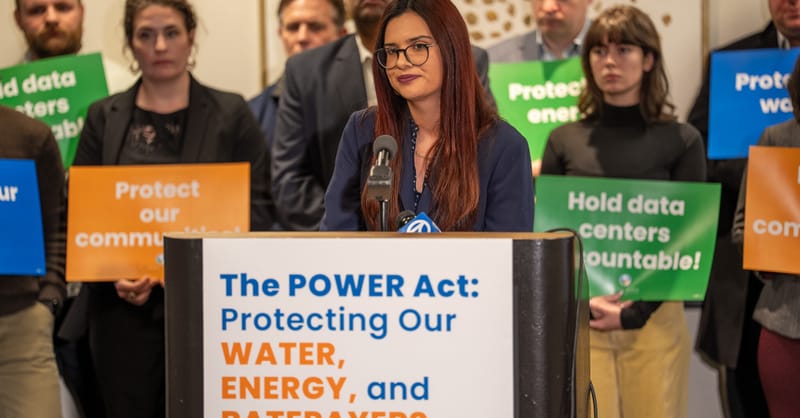
They have proposed an array of bills to impose moratoriums on data center development, revoke tax breaks, force data centers to pay for new energy infrastructure, and enact other…
Why it matters: Capitalize on the data center energy crisis by positioning your solar installation services as the primary solution for bypassing grid connection delays.
The Grid Capacity Bottleneck
The Illinois push to mandate 'bring your own renewables' for data centers is a harbinger of a global trend that European solar installers cannot ignore. As AI and cloud computing drive exponential demand for power, grid saturation has become the single biggest barrier to project deployment in markets like the Netherlands, Germany, and Ireland.
Why this matters for EU installersEuropean grid operators are increasingly delaying or denying grid connections for new solar parks. When major energy consumers—like hyperscale data centers—are forced to fund their own renewable infrastructure to bypass queue congestion, it creates a massive opportunity for commercial-scale installers. You are no longer just selling panels; you are selling grid independence.
Market ContextWe are seeing a shift where 'behind-the-meter' solutions are moving from a cost-saving measure to a business-critical requirement. In Europe, the pressure on the grid is forcing regulators to prioritize projects that include integrated storage or hydrogen production. Installers who can provide turnkey microgrid solutions—combining PV, BESS, and energy management software—will capture the high-margin contracts that traditional, grid-dependent solar developers are losing.
Strategic OutlookSolar businesses should stop viewing data centers as competitors for grid space and start viewing them as anchor clients. Watch for local planning authorities in Europe to adopt similar 'pay-to-play' or 'self-supply' mandates. If you are an installer, pivot your sales team to target industrial zones where grid capacity is at its limit. The ability to guarantee a connection by providing onsite generation is now a more valuable sales pitch than the levelized cost of energy (LCOE) alone.