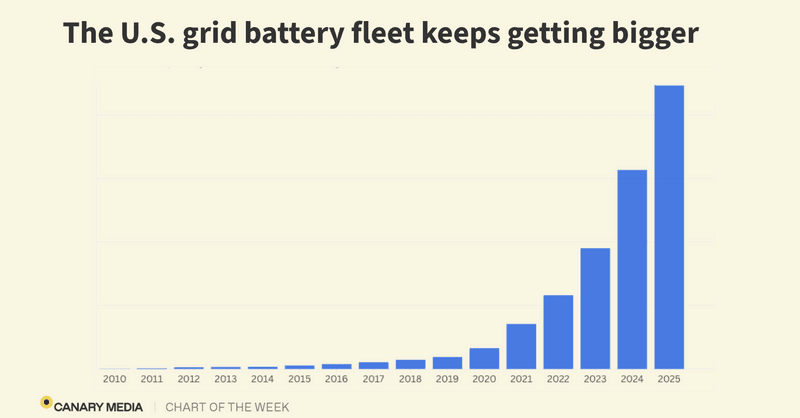
More than 13 gigawatts of energy storage was installed across the U.S. last year, per a new report from the Business Council for Sustainable Energy and BloombergNEF.
Why it matters: Integrate battery storage into every solar project now to stay competitive as residential markets shift toward self-consumption and energy arbitrage.
The Decoupling of Generation and Storage
While the data points to a U.S. surge, the implications for European solar installers are immediate. We are witnessing a fundamental shift: the grid-scale storage boom is the precursor to the massive decentralization of energy management. For the residential and commercial installer, this means the 'solar-only' sales pitch is rapidly approaching its expiration date.
Why This Matters for European Installers
Market Implications
The plummeting cost of lithium-ion, driven by these massive grid-scale deployments, is trickling down to the residential sector faster than most analysts predicted. We are moving from a market where batteries were a 'luxury add-on' to one where they are the core component of the energy system. Installers need to pivot their technical training and sales workflows to focus on VPP (Virtual Power Plant) readiness.
What Businesses Should Watch For
Monitor local grid capacity regulations. As storage becomes cheaper, regulators will likely move away from traditional net-metering toward time-of-use tariffs. Your business model must evolve from 'selling panels' to 'selling energy autonomy.' If you aren't already partnering with software providers that enable battery optimization and VPP participation, you are falling behind the curve.