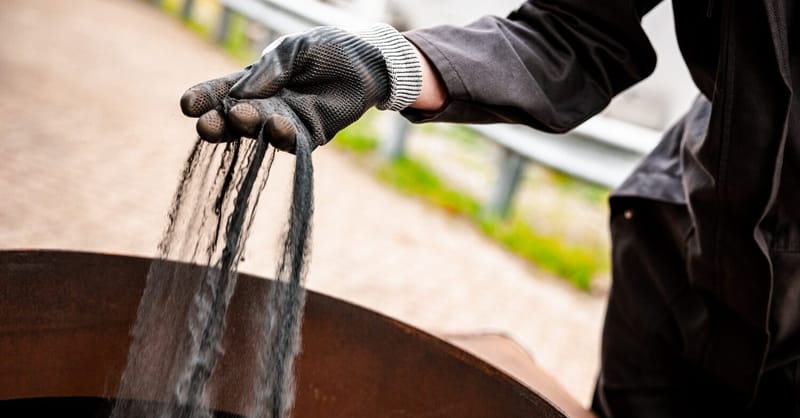
When rockets blast off Earth, they rely on tiny metal powders to help propel them into space. Now, an emerging group of startups and scientists is hoping to harness these particles for something more terrestrial: producing carbon-free energy for factories.
Why it matters: Leverage industrial iron fuel developments to position your solar business as a comprehensive partner for heavy-industry decarbonization.
The Shift Toward High-Temperature Industrial Heat
For European solar installers, the industrial sector has long been the 'hard-to-abate' frontier. While rooftop PV and battery storage solve electricity needs, decarbonizing high-temperature process heat—often requiring 500°C to 1,500°C—has been a major hurdle. Iron fuel technology represents a circular, carbon-free solution that complements, rather than competes with, renewable electrification.
Why This Matters for Your Business
As EU regulations like the Corporate Sustainability Reporting Directive (CSRD) tighten, your commercial clients are under immense pressure to eliminate Scope 1 emissions. Iron combustion allows them to maintain existing boiler infrastructure while switching to a carbon-neutral fuel source. This opens a new conversation for solar installers: you are no longer just selling a PV system; you are becoming a consultant for an integrated, decarbonized energy plant.
What to Watch For
Keep a close eye on pilot projects in the Netherlands and Germany. The scalability of the iron-regeneration cycle is the primary bottleneck. If these startups can demonstrate cost-parity with natural gas by 2026, the demand for onsite renewable hydrogen production will explode. Position your firm now as an expert in integrated energy systems, not just a panel installer, to capture this high-value industrial transition.