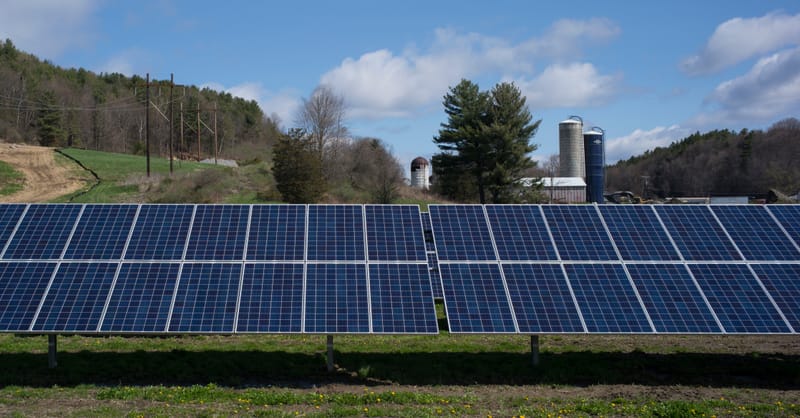
When Chad Raines took over his family’s Texas cotton farm in 2008, he thought the going would be easy. That’s because their first year was relatively profitable — but the success was…
Why it matters: Pivot your project pipeline toward agrivoltaics and rooftop installations to bypass the growing regulatory bottlenecks on agricultural land use.
The Growing Friction Between Solar and Agriculture
As the European Union pushes to hit 2030 decarbonization targets, the 'food vs. fuel' debate has moved from theoretical discourse to a major bottleneck for utility-scale solar deployment. While this article focuses on Texas, the sentiment is mirrored across the EU—from the Netherlands to Italy—where local opposition and land-use regulations are stalling large-scale projects.
Why This Matters for Installers
For European solar businesses, land-use conflict is no longer just a hurdle for developers; it is impacting the entire value chain. If utility-scale projects are tied up in legal disputes over 'prime agricultural land,' the market will inevitably shift toward agrivoltaics and C&I rooftop installations. Installers who master the technical integration of dual-use systems—where farming and energy generation coexist—will be the ones to secure permits that pure-play solar developers are currently losing.
The transition to renewables is inevitable, but the 'land-use' objection is a potent political weapon. Businesses that approach land acquisition with a collaborative, multi-purpose mindset will insulate themselves from the regulatory backlash that is currently paralyzing the utility-scale sector.