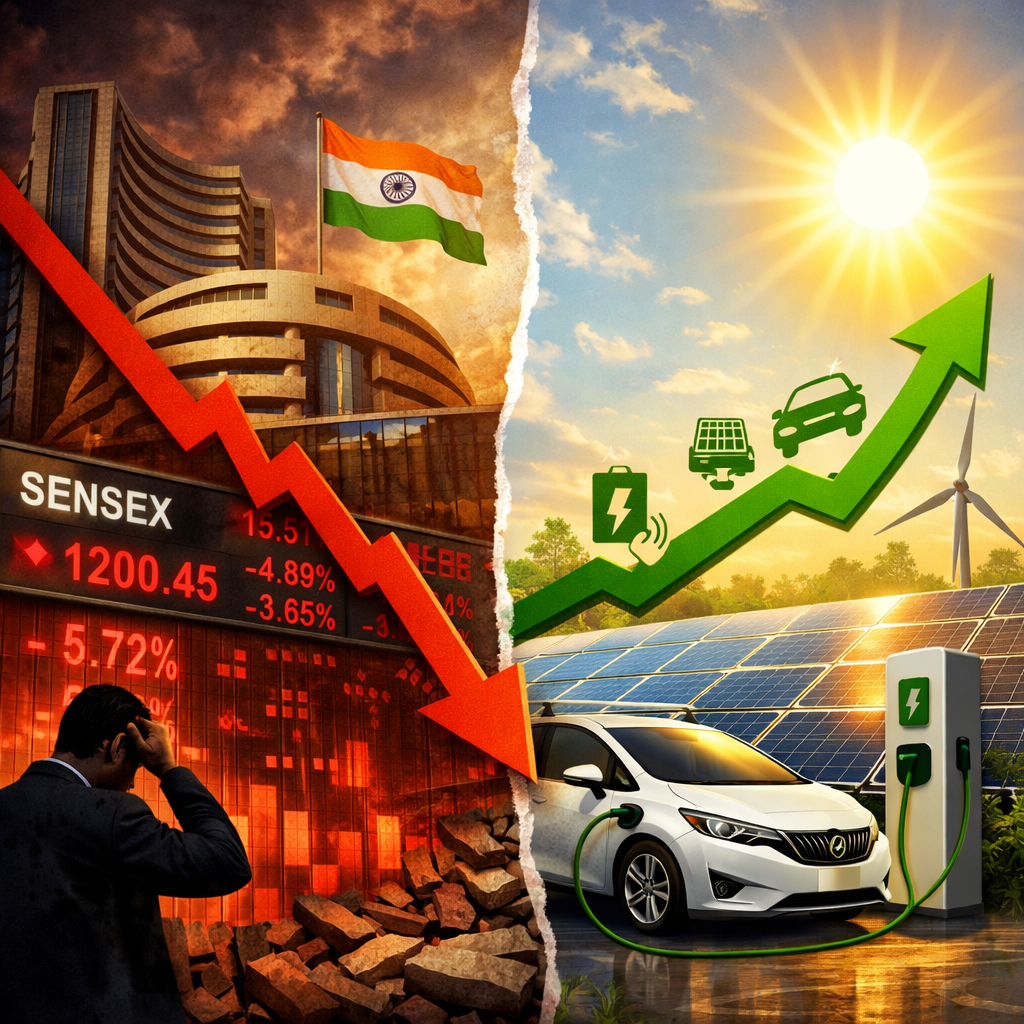
On April 9, 2026, the Indian stock market experienced high volatility, with the S&P BSE Sensex declining 1.2% and Nifty 50 falling nearly 1%. Despite this, some renewable energy stocks, like Insolation Energy, rose sharply.
Why it matters: Strengthen your business resilience by decoupling your growth strategy from broader stock market volatility and focusing on high-margin energy services.
Decoupling Green Energy from Broader Market Sentiment
The recent dip in Indian equity markets, contrasted against the resilience of specific solar players, offers a vital lesson for European solar installers: the energy transition is increasingly decoupling from general market volatility. While broad indices may react to interest rate fluctuations or macroeconomic headwinds, the solar sector is increasingly driven by structural demand rather than speculative trading.
Why This Matters for European Installers
European installers are currently navigating a complex environment characterized by high inventory levels and shifting subsidy landscapes. When global markets stutter, capital for large-scale projects can tighten, but residential and commercial (C&I) demand remains fundamentally anchored by high retail energy prices. The 'mixed resilience' seen in global markets proves that installers who focus on high-value, high-margin segments—such as integrated storage and energy management systems—are better insulated from index-level turbulence.
Strategic Implications
Ultimately, the resilience of specific solar stocks shows that investors—and by extension, customers—still view the energy transition as a non-negotiable imperative. Stay the course, but tighten your operational margins now to ensure you aren't caught in any liquidity crunches.