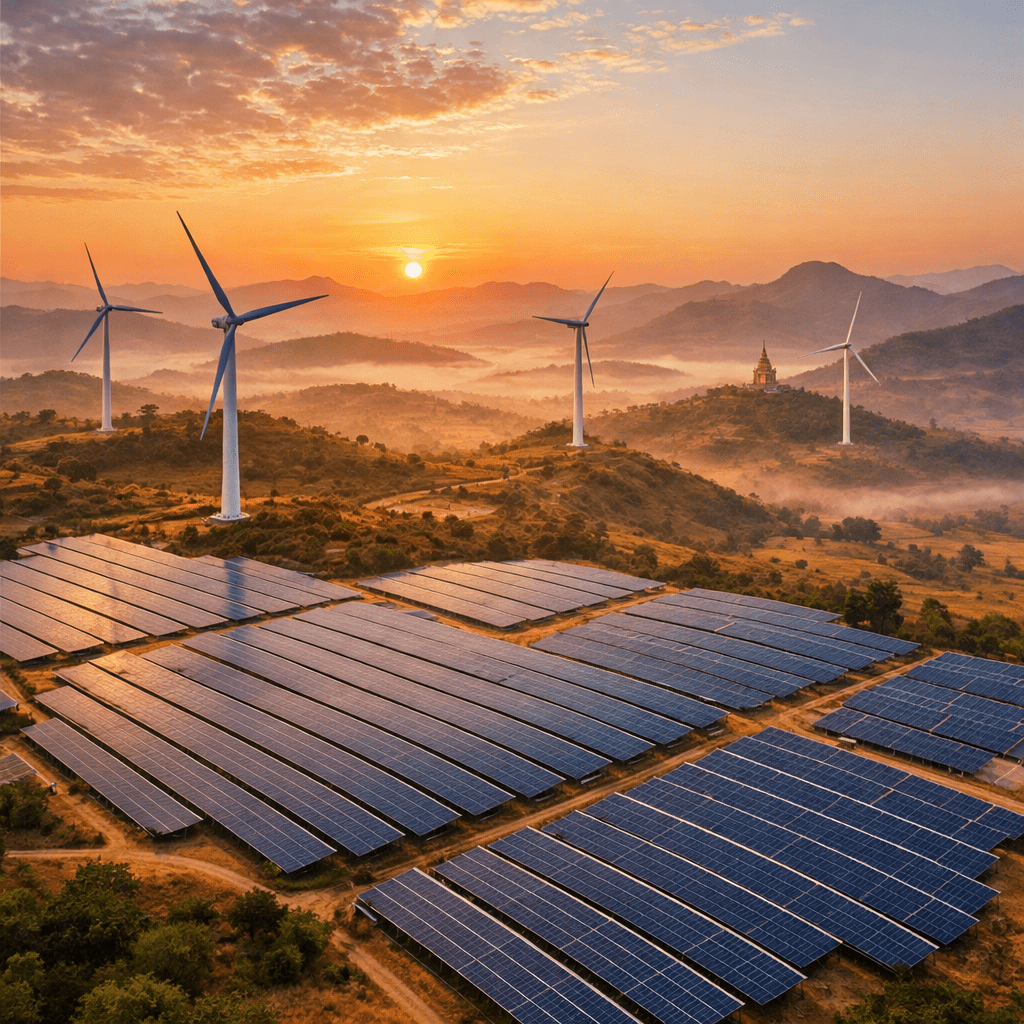
India has secured third place globally in renewable energy capacity, showing significant growth in solar and wind sectors.
Why it matters: Diversify your supply chain now to avoid the global hardware squeeze created by massive emerging market demand.
Global Shifts, Local Impacts
While India’s rise to third in global renewable energy capacity seems distant from a European installer’s daily grind, it signals a massive shift in the global supply chain. As India scales its domestic manufacturing and project capacity, it is increasingly competing for the same upstream components—inverters, mounting structures, and specialized silicon—that European firms rely on.
Why This Matters for EU Installers
Supply Chain Volatility: When a major market like India prioritizes aggressive domestic rollout, global procurement costs often fluctuate. European installers must move away from 'just-in-time' inventory models and build deeper, multi-vendor relationships to avoid being sidelined by larger, state-backed international projects.
Strategic Implications
The core lesson here is resilience through diversification. If you are reliant on a single manufacturer or a single tier of hardware, your business is vulnerable to these macro-market shifts. Savvy European installers are now focusing on 'energy-as-a-service' models rather than just hardware installation. By shifting the value proposition to long-term energy management and storage optimization, you insulate your business from the price volatility of panels and inverters. Watch for how India’s transmission infrastructure investments mirror the 'grid-modernization' needs in Europe; the technology and software solutions developed for their grid stability will likely become the benchmarks for our own distributed energy networks in the coming years.