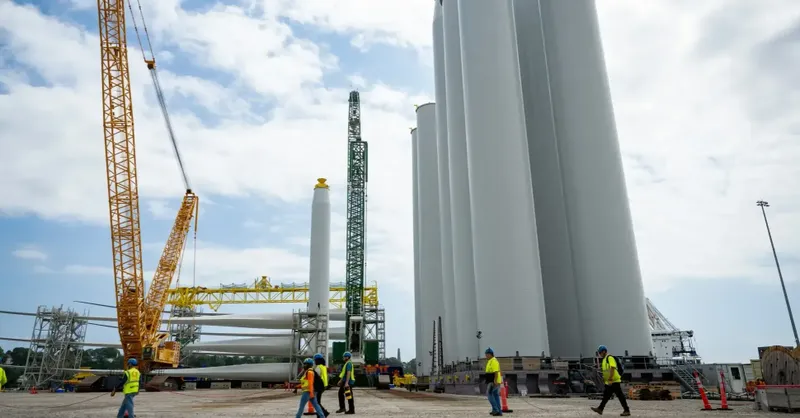
After taking a beating for the first year of the Trump administration, the beleaguered wind energy industry may finally see a glimmer of hope.
Why it matters: Monitor global renewable policy shifts to anticipate fluctuations in component pricing and capital availability for your solar projects.
Navigating Global Capital Volatility
While the headline focuses on the US market, European solar installers shouldn't view this as a distant geopolitical footnote. The global energy transition is a game of capital competition. When the US offshore wind sector faces regulatory headwinds or sudden policy shifts, it creates a 'capital flight' risk—or, conversely, an opportunity—for European renewable projects.
Why This Matters for Your Pipeline
European solar businesses are currently operating in a landscape defined by high interest rates and grid connection bottlenecks. If US offshore wind stalls, global supply chains for turbines and electrical infrastructure often pivot back to European markets, potentially easing component lead times. However, if the US market stabilizes, we see increased competition for the same pool of institutional investment capital that funds large-scale solar farms.
Market Implications
Strategic Advice
Solar business owners should move away from 'wait-and-see' strategies regarding hardware procurement. Use this period of global market instability to lock in long-term supply agreements. Don't rely on the assumption that renewable capital will always favor the European market; volatility in the US or China will always ripple through your local supply chain. Focus on operational efficiency and residential/C&I diversification to insulate your business from macro-level fluctuations in the utility-scale sector.