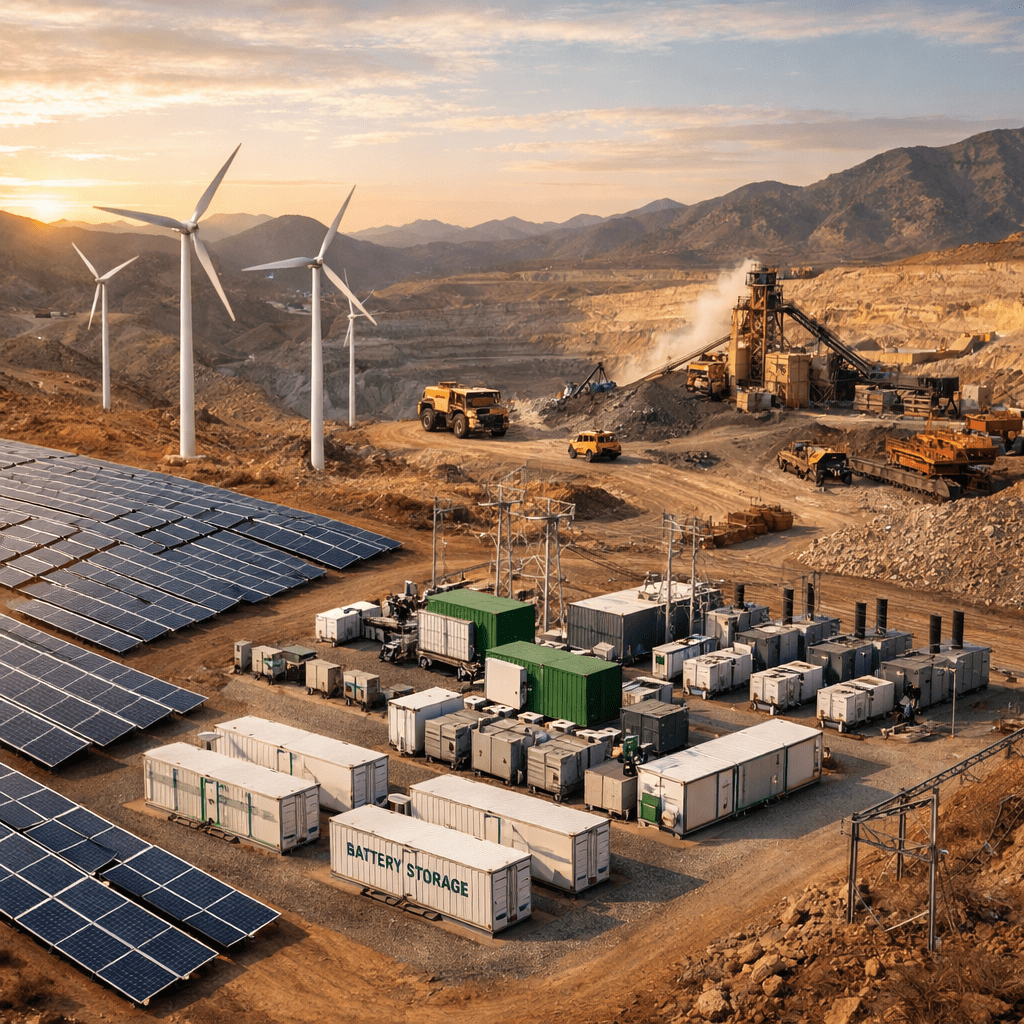
Aggreko has signed a 15-year agreement with Harmony Gold to develop a hybrid power project for the Eva Copper Mine in Queensland. This initiative will feature a solar plant, battery storage, and thermal power, aiming to create Australia’s largest off-grid renewable energy facility.
Why it matters: Expand your service offering from simple PV installation to complex hybrid microgrid management to capture high-value industrial contracts.
The Industrial Pivot to Hybridization
While this project is located in Australia, it serves as a massive proof-of-concept for European solar installers operating in the C&I (Commercial and Industrial) sector. As grid instability increases and carbon taxes like the EU’s CBAM (Carbon Border Adjustment Mechanism) begin to bite, heavy industry across Europe is scrambling to decarbonize their energy supply without sacrificing reliability.
Why This Matters for European Installers
The days of installing simple roof-mounted PV systems are evolving into complex energy management projects. Industrial clients no longer just want 'solar'; they want energy autonomy. By integrating solar with BESS (Battery Energy Storage Systems) and backup generation, installers can offer a resilient, off-grid-ready solution that protects clients from volatile spot-market electricity prices.
Market Implications
We are seeing a shift where the 'solar-only' installer is becoming a 'distributed energy systems integrator.' The technical challenge is no longer just the panels; it is the software-driven orchestration of solar, storage, and diesel/gas backup. Businesses that master the integration of these assets will dominate the C&I market in the coming decade. Watch for companies that start packaging Energy-as-a-Service (EaaS) offerings, as these will be the ones winning the largest, most profitable industrial contracts in 2027 and beyond.