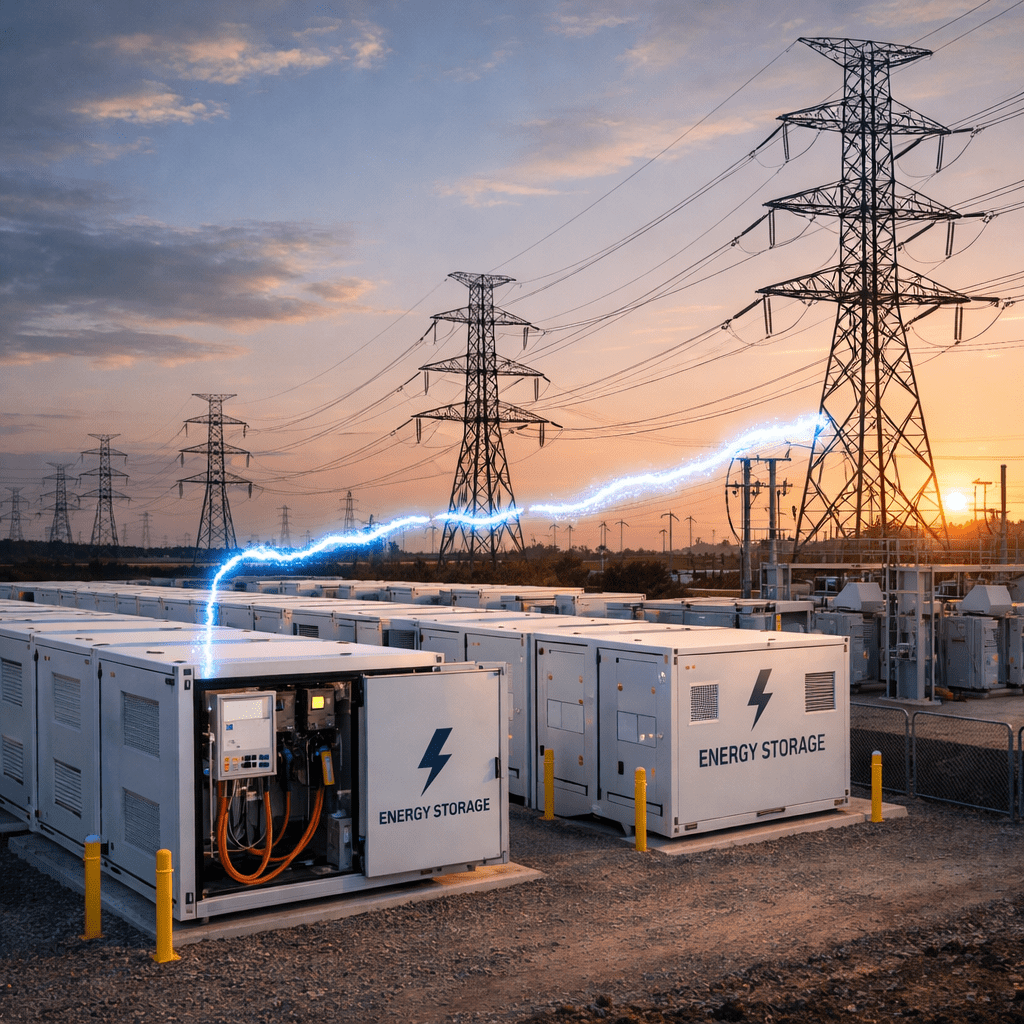
The Ministry of New and Renewable Energy clarified that developers of Firm and Dispatchable Renewable Energy projects do not require a No-Objection Certificate to sell power from energy storage systems charged by non-renewable sources before the main renewable components are operational.
Why it matters: Leverage early energy storage revenue streams to improve project cash flow and accelerate ROI on hybrid solar installations.
Regulatory Agility as a Value Driver
While this specific ruling originates in the Indian market, the underlying principle—regulatory flexibility for hybrid storage assets—is a critical bellwether for the European solar landscape. For European installers and developers, the bottleneck is rarely the technology; it is the administrative friction involved in grid connection and operational permitting.
Why this matters for EU installers:
European markets are aggressively pushing toward 'Firm and Dispatchable' models. As we transition from simple PV installations to complex hybrid systems (PV + BESS + Hydrogen), the ability to monetize storage assets during the commissioning phase is vital for cash flow. When regulators reduce the need for NOCs (No-Objection Certificates) for pre-commissioning power sales, they are effectively subsidizing the 'valley of death' for project finance.
Market Implications:
We are seeing a shift where battery energy storage systems (BESS) are being treated as grid-stabilizing assets rather than just solar-adjacent equipment. European installers should advocate for similar 'early-access' regulatory frameworks in their local jurisdictions to improve ROI on BESS-heavy projects.
Strategic Watchlist:
The bottom line: Operational freedom equals higher IRR. If you can monetize your battery before your panels are even fully wired, your competitive advantage increases significantly.