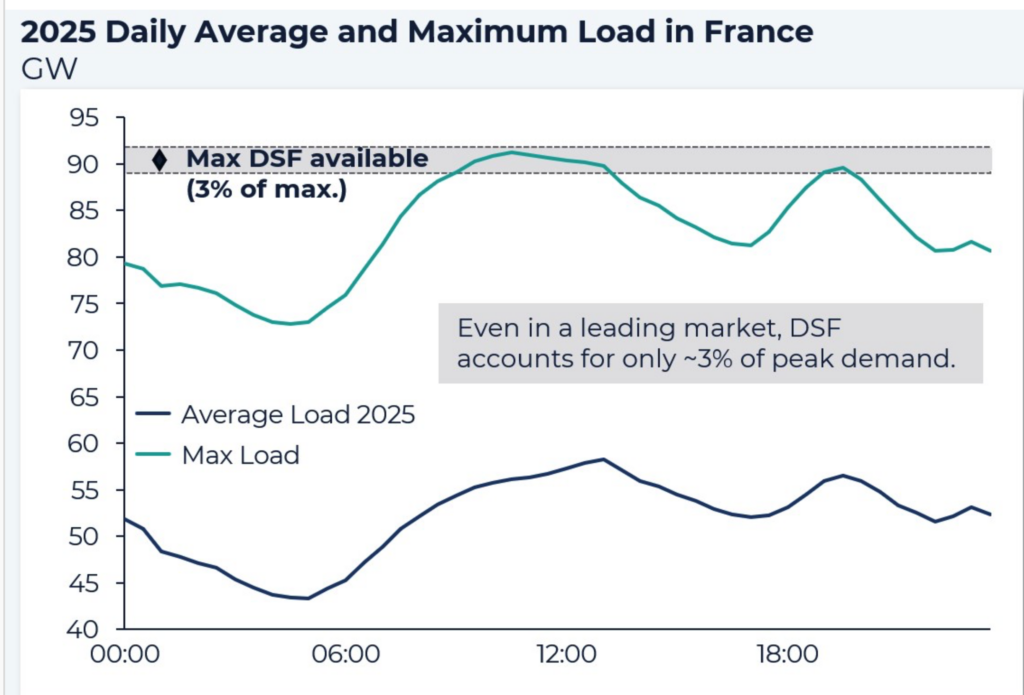
A medida que crece la necesidad de flexibilidad, los sistemas BESS suelen considerarse la solución principal. Sin embargo, el DSF puede prestar servicios similares en algunos mercados sin requerir grandes inversiones en infraestructura.
Why it matters: Diversify your service portfolio by integrating smart energy management software to compete with large-scale battery storage solutions.
The Shift Toward Virtual Balancing
For European solar installers, the long-held assumption that BESS is the only path to grid stability is being challenged. While physical battery storage remains the gold standard for immediate backup and self-consumption, Demand-Side Flexibility (DSF)—the ability to modulate energy consumption in real-time—is emerging as a powerful competitor in balancing markets.
Why This Matters for Installers
Your customers are increasingly looking for ways to lower their energy bills beyond just PV generation. If you are only selling hardware (panels + batteries), you are missing the software-driven revenue stream. By integrating smart energy management systems (EMS) that tap into DSF, you can turn a standard installation into a revenue-generating asset for the homeowner.
What to Watch For
Keep a close eye on the regulatory frameworks in your specific region. Markets like the Netherlands and Germany are rapidly evolving their VPP (Virtual Power Plant) protocols. If you aren't already partnering with software providers that enable automated load shedding or shifting, you risk being commoditized. The future isn't just about how much energy a house generates; it’s about how intelligently that energy is deployed when the grid is under stress. Stop selling components and start selling grid-integrated energy solutions.