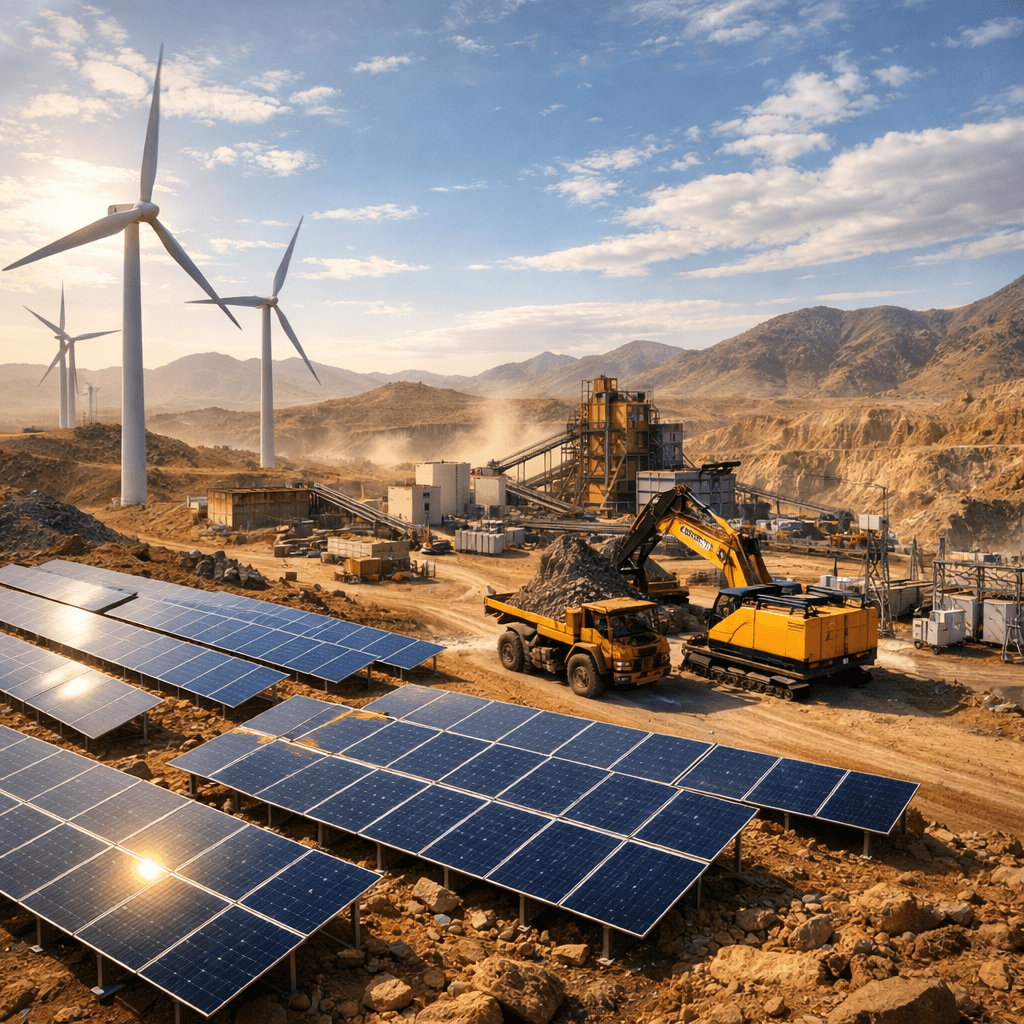
Fortescue, a leading iron ore producer, is investing $2.5 billion to create a renewable energy network for its Pilbara operations, featuring solar, wind, and battery storage. By 2027, the company aims to fully operate its mines on renewables, achieving significant cost savings and planning to expand this energy model globally.
Why it matters: Leverage the industrial shift toward private microgrids to transition from residential solar to high-value C&I project management.
The Industrial Pivot to Self-Sufficiency
Fortescue’s massive $2.5 billion investment in the Pilbara region is more than just a mining project; it is a blueprint for the future of industrial energy procurement. For European solar installers, this signals a shift away from simple rooftop installations toward complex, hybrid microgrid solutions for high-demand industrial clients.
Why this matters for European solar installers:European energy prices remain volatile, and heavy industry—from manufacturing to logistics—is feeling the squeeze. When major global players like Fortescue prove that integrated solar-plus-storage can replace fossil-fuel baseload, it creates a massive B2B sales opportunity. Installers who can move beyond 'residential PV' to offer C&I (Commercial & Industrial) microgrid consulting are set to capture a high-margin segment of the market.
Market context and implications:The 'energy-as-a-service' model is gaining momentum. Companies are no longer looking for hardware; they are looking for energy security and cost predictability. The Fortescue model highlights that the future is not just about panels, but about the intelligent orchestration of solar, wind, and BESS (Battery Energy Storage Systems) to ensure 24/7 industrial operations. This is the ultimate proof-of-concept for the viability of off-grid or private-grid industrial solar.
What solar businesses should watch for: