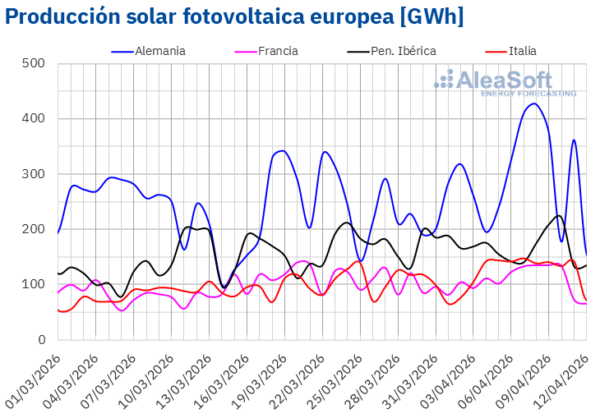
En la segunda semana de abril, los precios promedio semanales de la mayoría de los principales mercados eléctricos europeos descendieron respecto a la semana anterior y se situaron, en su mayoría, por debajo de 75 €/MWh.
Why it matters: Pivot your sales strategy from grid-export to battery-backed self-consumption to protect your customers from falling electricity spot prices.
The Price Cannibalization Trap
The recent dip in European electricity prices, driven by solar production records in Germany and France, is a double-edged sword for the residential and commercial solar industry. While high generation proves the efficacy of our installations, it simultaneously triggers price cannibalization, where an oversupply of solar energy during peak daylight hours drives spot market prices toward zero.
Why This Matters for Installers
For your clients, the narrative of 'selling back to the grid' is becoming increasingly fragile. As market prices drop during peak production, the ROI calculations for standard grid-export models are no longer as attractive as they were two years ago. Installers must pivot their sales pitch from simple grid-feed-in to self-consumption optimization.
Market Implications
We are witnessing a structural shift in the European energy landscape. The 'merit order' effect is effectively squeezing the profitability of pure-play solar assets that lack storage. Solar businesses that continue to rely on government-subsidized feed-in tariffs will struggle as these policies are phased out in favor of market-exposed pricing.
Watch this: Keep a close eye on the proliferation of dynamic pricing tariffs across the EU. Businesses that can help homeowners navigate these volatile rates through smart hardware integrations will dominate the market in 2025 and beyond.