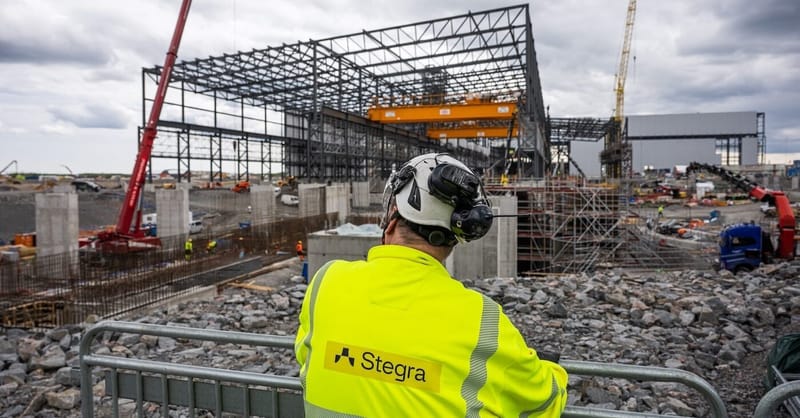
Stegra has secured the financing needed to complete its flagship green-steel mill in northern Sweden. The company, formerly H2 Green Steel, said it landed 1.4 billion euros ($1.65 billion) in capital from a group of new and existing investors led by Sweden’s prominent Wallenberg family.
Why it matters: Leverage the growth of green industrial projects to position your solar installations as a low-carbon, ESG-compliant solution for commercial clients.
The Energy-Intensive Industrial Shift
The successful capital raise for Stegra (formerly H2 Green Steel) represents a massive milestone for the European decarbonization narrative. For solar installers, this isn't just about steel; it’s about the massive, localized electricity demand required to power gigawatt-scale green hydrogen and electrolysis processes.
Why This Matters for Solar Installers
While Stegra focuses on heavy industrial loads, their success validates the 'Green Industrialization' trend across Northern and Central Europe. As these projects move from funding to construction, they create a 'halo effect' for the solar industry:
Market Implications
We are witnessing a decoupling of energy prices for heavy industry. By utilizing dedicated renewable baseloads, projects like Stegra set a precedent for how large-scale solar and storage can integrate with industrial manufacturing. This creates a blueprint for 'Behind-the-Meter' (BTM) solutions for smaller industrial parks that want to hedge against volatile spot market prices.
What Solar Businesses Should Watch For
Keep a close eye on the secondary supply chain. As Sweden and the Nordics lead in green steel, the price premium for low-carbon steel will eventually drop, making it the standard for high-end solar racking. Installers should start asking their distributors about the carbon footprint of their mounting hardware; your commercial clients will soon start asking for those EPDs (Environmental Product Declarations) to hit their own sustainability targets.