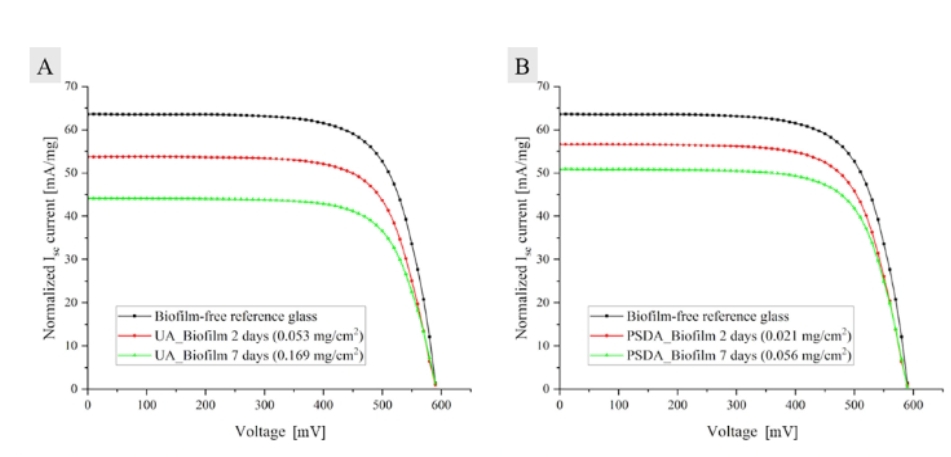
En esos experimentos, la colonización durante siete días se asoció con pérdidas de corriente de cortocircuito (Isc) de entre el 15,20 % y el 30,66 % en muestras de la Universidad de Antofagasta, y de entre el 11,01 % y el 20,12 % en muestras de la Plataforma Solar del Desierto de Atacama, en paralelo a un aumento de la biomasa superficial.
Why it matters: Ignoring biofilm in your O&M contracts is a fast track to failing performance guarantees in arid, high-dew solar environments.
The Invisible Efficiency Killer
We obsess over PID (Potential Induced Degradation), LID (Light Induced Degradation), and micro-cracks from poor handling. But as the European solar fleet pushes into more extreme environments—and as we see increasingly erratic humidity patterns in the Mediterranean—we need to talk about biological fouling. A 30% drop in Isc from microbial films in just one week isn't just a research curiosity; it's a catastrophic yield event that will trigger every string monitoring alarm in your dashboard.
Why Standard Cleaning Won't Cut It
If you're managing utility-scale assets in Southern Spain or the dry regions of Italy, you’re likely already budgeting for semi-annual dry brushing or robotic cleaning. But standard cleaning protocols are designed for dust and sand, not sticky, metabolic biopelular residue. If you're using plain water, you're just spreading the bacteria around. You’re essentially fertilizing the next colony.
Stop treating every soiling event like it’s just sand. If you're building in arid zones prone to dew, check the glass surface chemistry. The future of solar isn't just about higher efficiency modules—it's about keeping the gunk off.