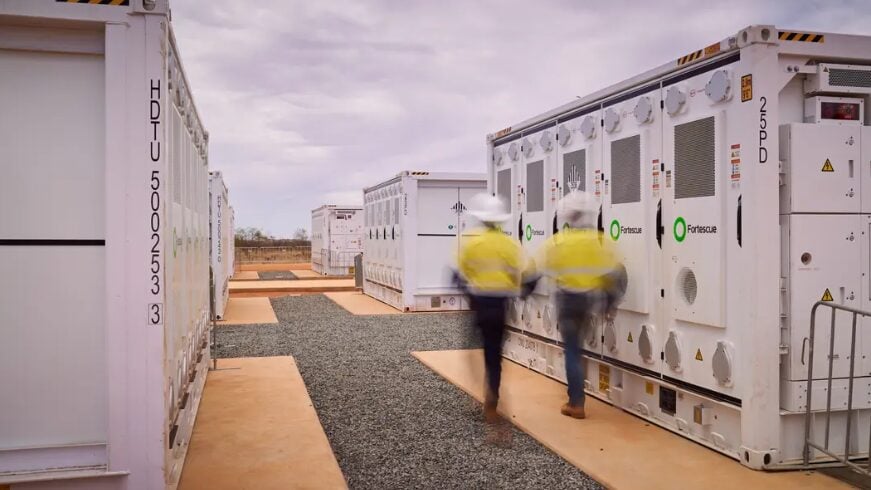
Fortescue has accelerated its timeline for deploying 4-5GWh of battery energy storage systems (BESS) paired with 1.8GW of renewable energy generation, which it now expects to begin commercial operation by 2028.
Why it matters: Prepare your sales strategy to offer integrated solar-plus-storage microgrid solutions for large industrial clients to stay competitive.
The Industrial Shift Toward Hybrid Autonomy
Fortescue’s aggressive timeline for a 5GWh BESS deployment isn't just a mining story; it’s a bellwether for the European C&I (Commercial and Industrial) sector. As European energy prices remain volatile, the push for behind-the-meter hybrid systems—pairing solar PV with large-scale storage—is moving from a 'nice-to-have' for ESG targets to a core operational necessity for energy security.
Why This Matters for European Installers
Market Implications
We are witnessing the 'utility-fication' of private industrial energy assets. Fortescue is essentially building a private utility to eliminate dependence on fossil fuels. For European solar businesses, this signals a shift in customer expectations: clients no longer just want solar panels; they want total energy autonomy. Installers who can offer sophisticated energy management systems (EMS) that bridge the gap between generation and storage will capture the highest margins in the coming 24 months.
What to Watch For
Keep a close eye on the LCOS (Levelized Cost of Storage) trends in the Australian market. When massive industrial players move this quickly, they drive down component costs via sheer volume. European installers should prepare for a influx of high-capacity storage hardware that will soon become the standard for large-site retrofits.