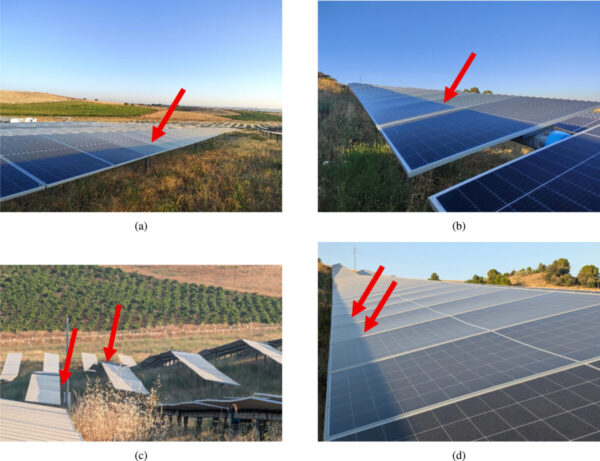
Científicos de la Universidad Politécnica de Madrid han identificado las pérdidas por backtracking subóptimo, que contribuye a explicar la brecha entre la producción simulada y la real en plantas fotovoltaicas en terrenos ondulados.
Why it matters: Stop ignoring terrain in your tracker simulations, or be prepared to eat a 5% performance gap out of your own bottom line.
The Slope Tax You Didn't Budget For
We’ve all been there: the EPC proposal shows a beautiful P50 curve, the client signs, and the commissioning report comes back looking... okay. But eighteen months later, the O&M team is scratching their heads over a consistent 4-5% underperformance. The UPM research finally puts a number on the ghost in the machine: suboptimal backtracking on uneven terrain.
The Reality Check: Most simulation software, including PVSYST, assumes a flat plane. But real-world sites in Andalusia or the Alentejo are rarely flat. When you deploy a 2P or 1P tracker system on undulating ground, the standard backtracking algorithms—which prevent inter-row shading—often fail to account for the actual slope variance. That 5% loss isn't just 'weather'; it's a structural miscalculation of your plant's geometry.
What the EPC Needs to Change Today
If you’re building on anything other than a billiard table, start charging for the extra engineering hours required to calibrate the trackers to the topography. Either that, or accept that your long-term yield estimates are just expensive fiction.