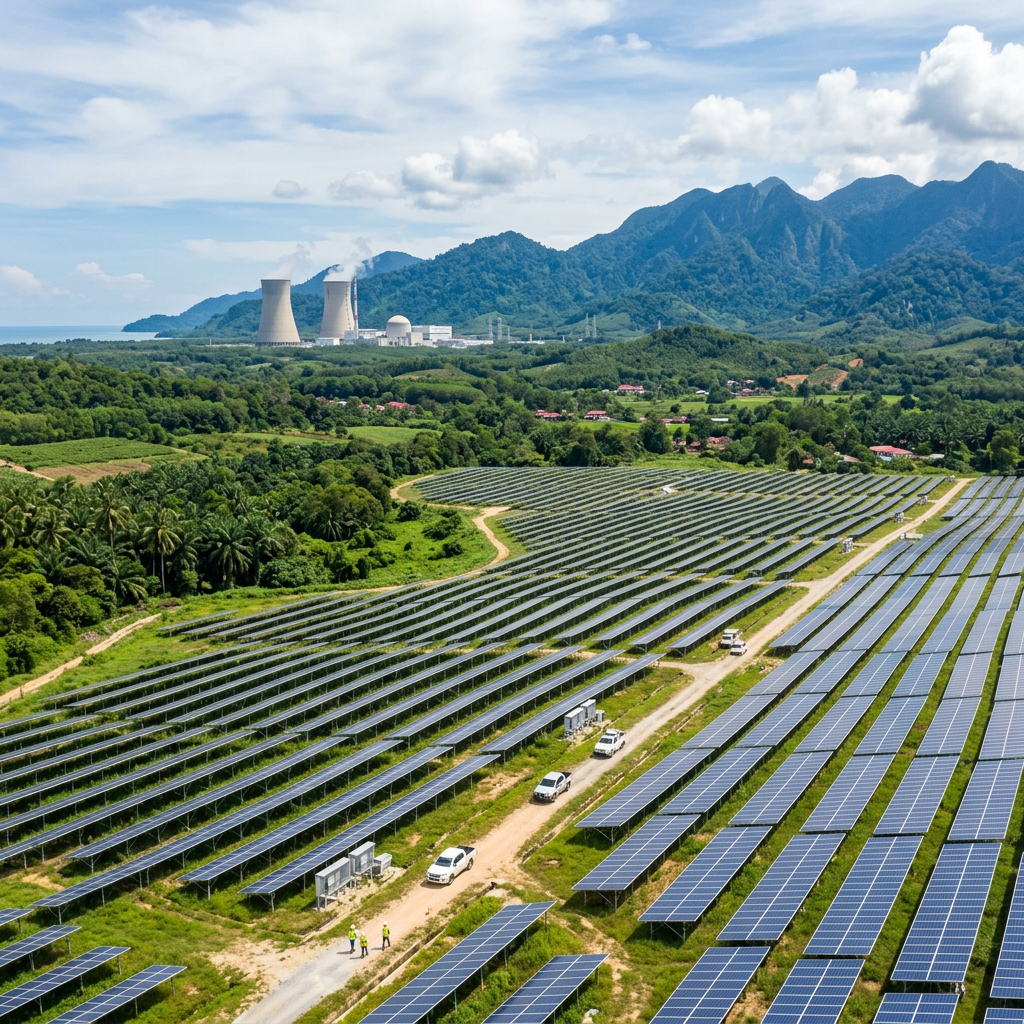
The country's solar capacity is projected to exceed 6.5 gigawatts by 2029, while nuclear energy is under consideration to ensure stable electricity supply.
Why it matters: Stop watching emerging market utility-scale plans; focus on grid-forming tech and BESS to survive the EU's volatile price environment.
Don't Look East for Your Strategy
Let’s be blunt: Malaysia’s energy roadmap is a nice headline for a climate conference, but for an installer in Bavaria or a developer in Andalusia, it is noise. While Southeast Asian markets are fixated on baseload-chasing nuclear power to solve grid instability, Europe is already deep into the messy, high-stakes reality of flexible generation and demand-side management.
The Real Lesson: The 'Stable Supply' Trap
The Malaysian narrative frames solar as a capacity-building exercise while nuclear provides the 'stability.' If you are selling solar in the EU today, you should know that this is a 2015 mindset. In the current European market, simply 'adding capacity' is a recipe for negative pricing and cannibalized margins. If you aren't selling smart inverters capable of grid-forming functions or integrated BESS packages that comply with the latest EU Grid Connection Network Codes, you aren't building a transition—you're building a liability.
If your business model relies on the same logic as a developing nation—simply plugging more panels into a grid that can't handle the influx—you’re ignoring the reality of the European energy transition. We don't need more 'solar expansion' that destabilizes the local transformer. We need smarter, locally-integrated projects that treat the grid as a partner, not a dumping ground.