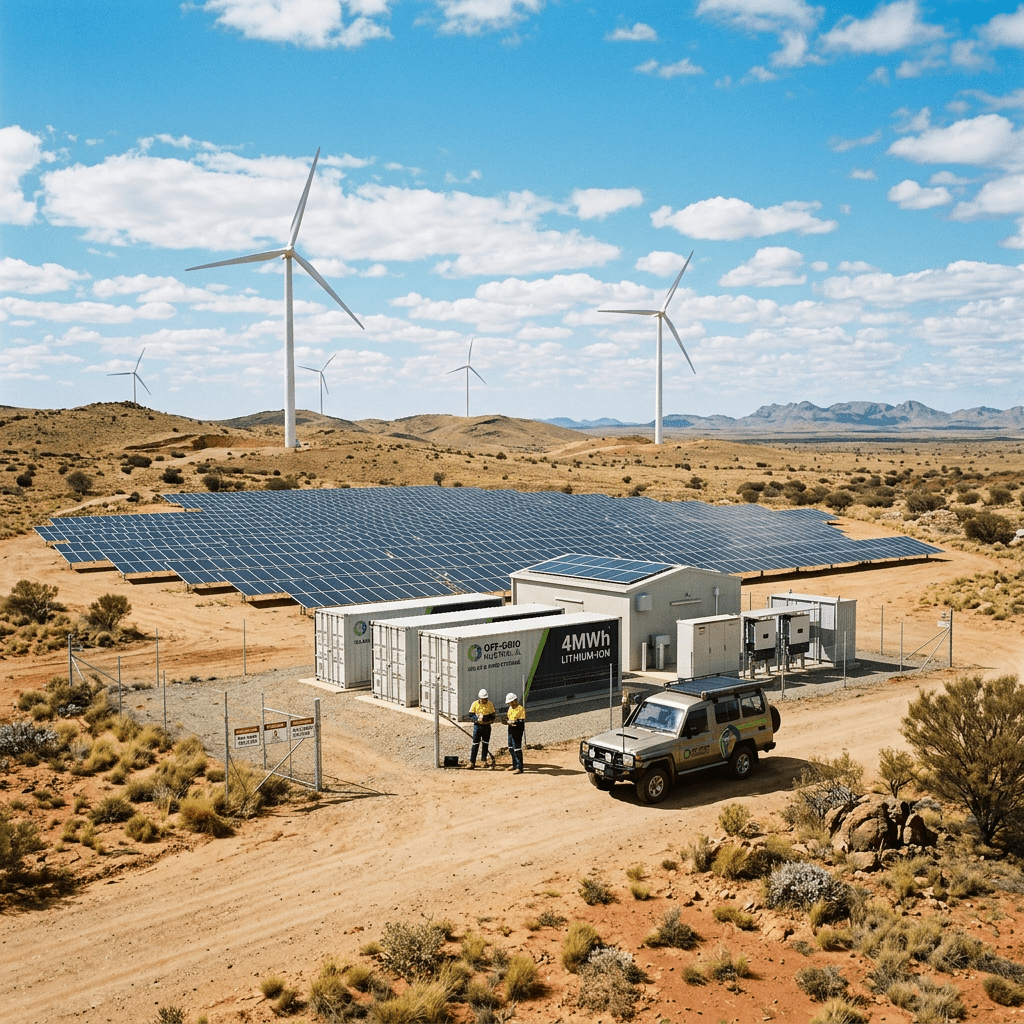
The project includes a 4.5 GWh battery energy storage system, integrated with solar and wind energy, enabling self-sufficient clean energy hubs while mitigating fossil fuel reliance and environmental impact.
Why it matters: Fortescue's massive battery deployment proves that grid-independent hybrid systems are the new standard for industrial power; adapt your C&I pitch accordingly.
The 4.5 GWh Reality Check
Fortescue dropping a 4.5 GWh BESS system in the Australian outback isn't just a mining company going green; it’s a masterclass in grid-independent scaling. While you’re fighting with local DSOs in Bavaria or Tuscany to get a 200kW connection approved, Fortescue is showing the world that storage-first architecture is the only way to bypass legacy grid failures.
Why This Matters to Your P&L
If you think this is irrelevant because you operate in Europe, think again. The technology stack being deployed here—high-density, containerized, multi-gigawatt-hour lithium storage—is driving the global price floor for LDES (Long-Duration Energy Storage).
The real takeaway? Look at the integration layer. Fortescue isn't just buying batteries; they are buying sophisticated energy management systems (EMS) that handle sub-second frequency response and load balancing without a central grid. If you are an installer in the Netherlands or the UK, your clients are going to demand this level of reliability as grid congestion charges continue to eat into their ROI. Stop selling panels and start selling the EMS that keeps the lights on when the grid goes dark. Fortescue is building the future of industrial microgrids; make sure your firm is ready to install them when the demand hits your market.