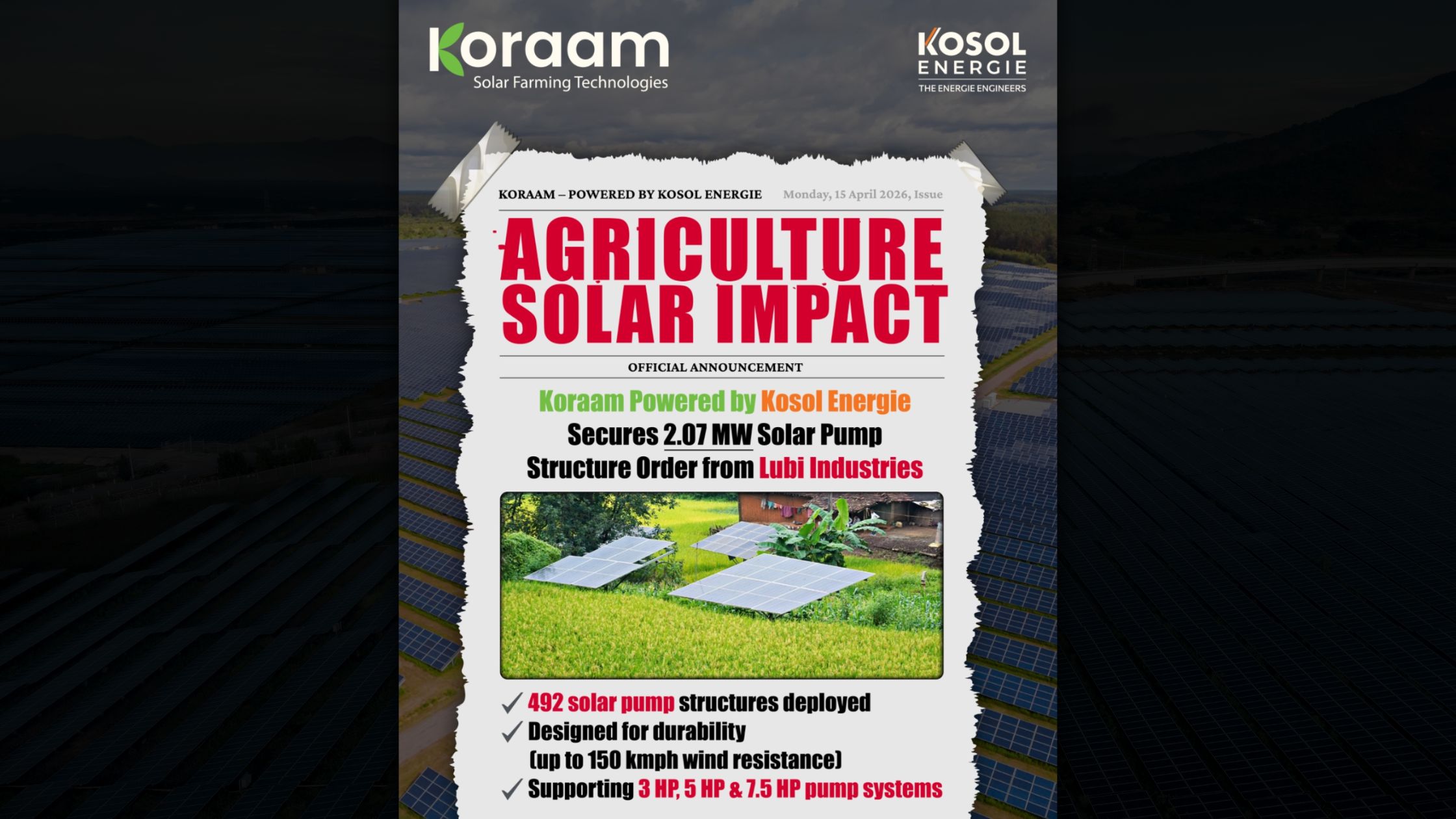
Koraam, supported by Kosol Energie, completed a 2.07 MW solar mounting structure order for Lubi Industries in Maharashtra, enhancing its agricultural solar market presence.
Why it matters: This is a local Indian manufacturing update with zero impact on the European EPC market — filter it out and get back to your permitting backlog.
Let’s be honest: this press release is a classic case of noise disguised as industry progress. For a European installer or EPC firm, a 2.07 MW order in Maharashtra for pump mounting structures is functionally irrelevant to your P&L. Here is why you shouldn't waste your bandwidth on this:
The Scale Gap
European agricultural solar, or 'Agri-PV', is currently defined by complex dual-use regulations and grid-coupling challenges—not basic pump structures. While the Indian market is hyper-focused on off-grid irrigation pump displacement via government subsidies, your reality is defined by the EU’s Renewable Energy Directive (RED III) and local land-use constraints. A 2 MW project in India utilizes vastly different labor models and structural steel standards compared to a 2 MW agrivoltaic installation in the Netherlands or Bavaria.
Why This Isn't Your Battle
Don't fall for the 'global solar growth' narrative when it lacks localized application. Unless you are specifically entering the Indian irrigation market with a high-margin micro-inverter or specialized sensor suite, treat this as what it is: a local supply chain announcement for a vastly different economic ecosystem.