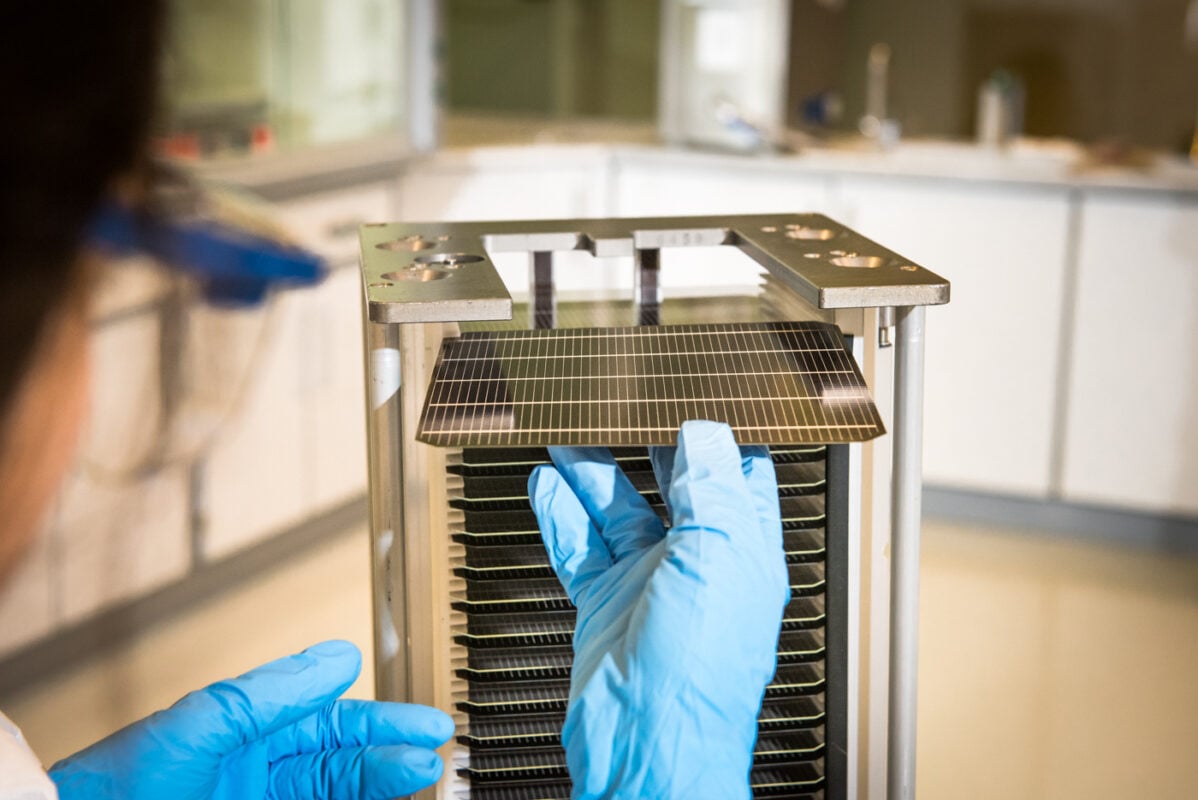
UK-based perovskite PV specialist Oxford PV has joined a British research project to develop electric vehicle-integrated solar technologies.
Why it matters: Perovskite on cars is a PR dream but a physical dead end; focus your business on the tandem cell revolution coming to your customers' rooftops instead.
Don't hold your breath for the 'solar car' revolution
Oxford PV is doing the heavy lifting in material science, pushing perovskite-on-silicon tandems toward the 30% efficiency barrier. That is genuine engineering progress. But pinning their expertise to vehicle-integrated photovoltaics (VIPV)? That’s a classic case of chasing a shiny object while the residential and C&I markets are screaming for grid-parity solutions.
Look, we have been talking about solar-integrated vehicles since the Fisker Karma disaster. The physics remains brutal: a standard passenger EV roof provides maybe 1–2 square meters of usable space. Even with 30% efficient cells, you are looking at a few hundred watts of peak power. In a climate like Germany or the UK, that translates to a handful of kilometers of range on a perfect July day. That doesn't move the needle on decarbonization; it’s a marketing gimmick for executive boardrooms.
The real play is on the roof, not the hood
For the average installer in the Netherlands or Italy, this news should be treated as noise. The real story at Oxford PV is their move toward mass production of tandem cells for standard rooftops. If they can drop the cost of their tandem modules to within 10-15% of high-end PERC or TOPCon, that changes the ROI for residential clients who are space-constrained.
Focus on where the money is: high-density modules that make limited roof real estate profitable. Leave the automotive R&D to the venture capital firms burning cash on luxury vanity projects.