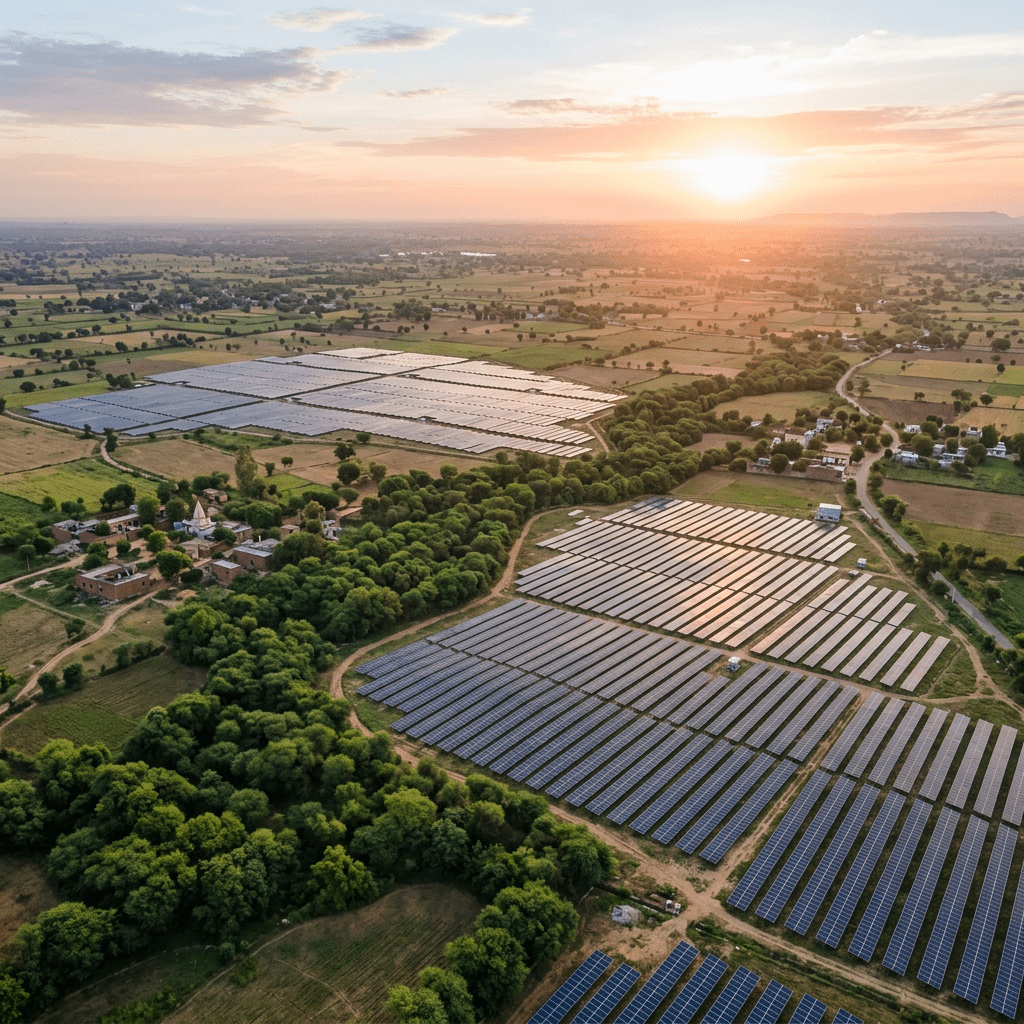
The Haryana Government has approved a ₹298 crore annual operations plan under CAMPA, focusing on afforestation and solar energy integration.
Why it matters: This is local Indian policy with zero impact on the European market; don't waste your time on it.
Let’s cut through the noise: a regional government in India spending roughly €33 million on a mix of saplings and rooftop solar for forest offices is a drop in the bucket of the global energy transition. For an installer in Berlin or a project developer in Madrid, this news is essentially irrelevant. It’s a local government administrative update, not a market-moving event.
The Trap of 'Sustainability Synergy'
We keep seeing these PR-heavy announcements where public funds are split between 'green' initiatives—in this case, afforestation—and small-scale solar deployments. The danger for European contractors is thinking this represents a scalable model for agrivoltaics or land-use policy.
What Actually Matters for Your Bottom Line
Ignore the headlines about planting trees alongside PV panels unless there is a clear legislative framework for agrivoltaic subsidies. Focus instead on the upcoming auctions for commercial PV. That’s where the margins are, and that’s where the real money is being made.