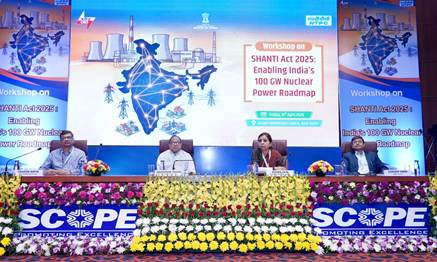
A high-level workshop organized by the Central Electricity Authority and key stakeholders focused on implementing the SHANTI Act, 2025, to enhance India's nuclear power capacity to 100 GW.
Why it matters: Nuclear headlines are a distraction; focus on BESS integration to keep your C&I margins protected from grid volatility.
Every time a G20 nation announces a massive nuclear infrastructure plan, the solar doomsayers start shouting about 'baseload competition' and 'cannibalizing PV capacity.' Let’s cut through the noise: India’s 100 GW nuclear ambition under the SHANTI Act is a multi-decade timeline, not a threat to your C&I pipeline.
The Reality of Lead Times
Nuclear projects have a habit of staying 'five years away' for twenty years. Even with Small Modular Reactors (SMRs), the capital expenditure per megawatt is orders of magnitude higher than a bifacial tracking array using LONGi or Jinko modules. If you’re installing in Europe, this news is almost entirely irrelevant to your P&L today.
Why Nuclear Matters for You (Indirectly)
The only reason this matters for an installer in Bavaria or a developer in Tuscany is the Grid Congestion Factor. If India—or any major power market—succeeds in stabilizing its grid with massive baseload nuclear, it lowers the overall system risk. However, grid operators are notoriously slow to upgrade distribution networks. Whether the power comes from a nuclear plant or a 500MW solar farm in Rajasthan, the bottleneck remains the transformer at the end of the street.