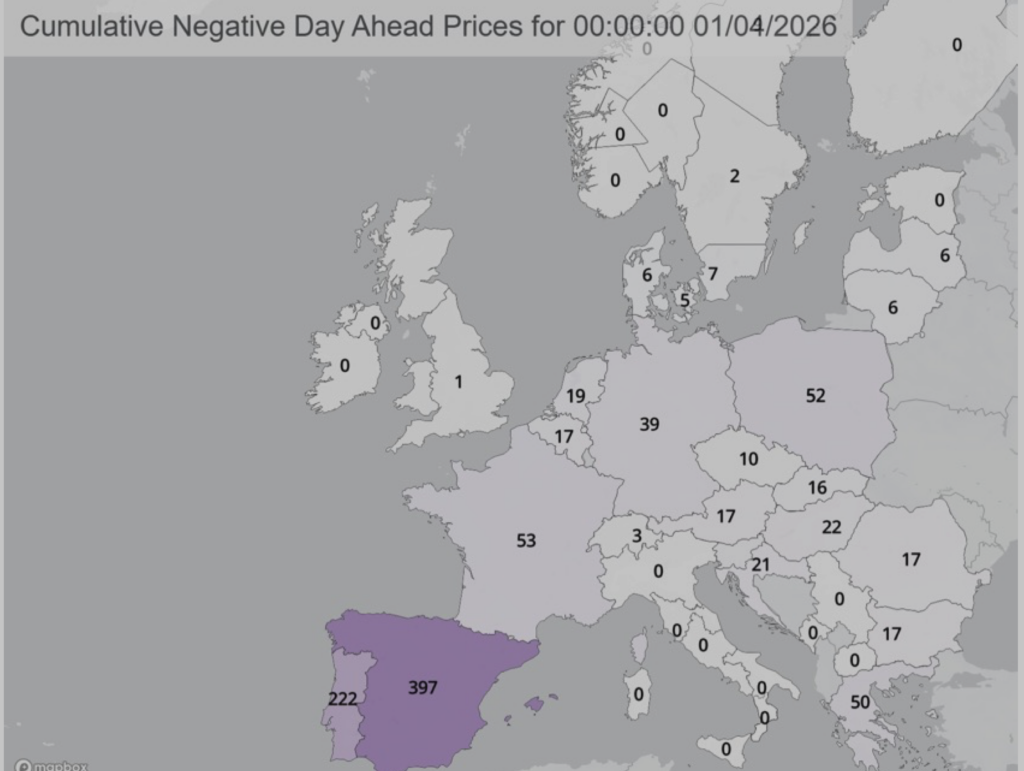
Según Montel, en España se contabilizaron 397 horas con precios negativos entre enero y marzo, una cifra muy superior a las 48 horas registradas en el mismo periodo de 2025 y cercana al total anual de ese año (555 horas).
Why it matters: Negative pricing is now a feature, not a bug; if your PV proposals don't include storage, you're setting your clients up for a financial cliff.
The Days of Easy ROI are Dead
If you are still selling PV systems in Iberia based on 2022-era revenue models, stop. A jump from 48 to 397 hours of negative pricing in a single quarter isn't just a market hiccup; it is the death knell for 'solar-only' project economics. When the spot price hits negative territory, your merchant tail revenue doesn't just evaporate—it becomes a liability.
The BESS Pivot is No Longer Optional
For the C&I installer, this is your new sales pitch. If you aren't integrating at least 0.5 kWh of storage per kWp of installed solar, you are selling a product that is effectively obsolete during peak production windows. We are moving toward a 'storage-by-default' market where the profitability of a 500kW rooftop project in Seville now hinges entirely on the ability to shift load or store excess energy during those 397+ negative hours.
We’ve seen this movie before in the German market with the 'Dunkelflaute,' but Spain’s issue is the opposite: too much sun, too little interconnection, and a grid that can't handle the influx. If you are building without a battery integration plan, you aren't building a solar plant; you're building a source of financial risk.