JinkoSolar has launched a new lightweight solar module designed for low-load-bearing rooftops.
Why it matters: Lightweight modules move you from 'we can't build here' to 'sign the contract' on thousands of older industrial rooftops.
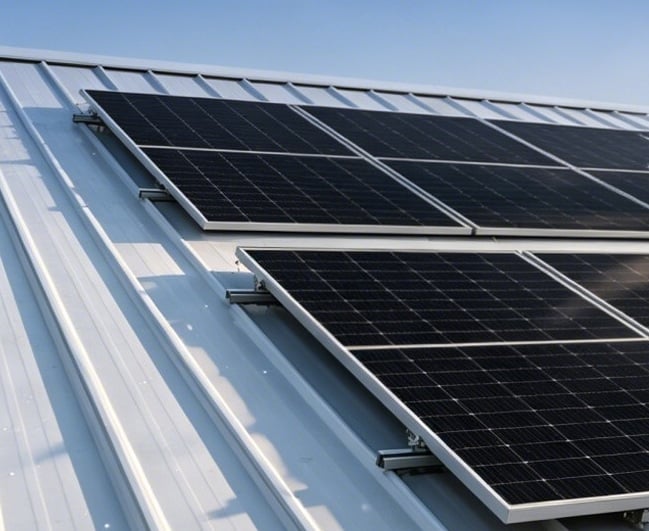
JinkoSolar has launched a new lightweight solar module designed for low-load-bearing rooftops.
The Structural Ceiling of C&I Growth
We’ve all been there: you’re standing on the roof of a 1980s-era logistics warehouse in the Ruhr Valley, looking at a client who wants a 500kWp system, only to find the purlins are bowing under the weight of a pigeon. Standard glass-glass modules weigh in at 22-25kg per unit, and when you add the mounting system and a few inches of snow, you’re pushing the structural integrity of the roof to its breaking point.
Why This Isn't Just Another Spec Sheet
Jinko’s move to push lightweight TOPCon technology into the European market is a tacit admission that we’ve tapped out the 'easy' roofs. By shedding weight—likely by thinning the front glass or shifting to glass-backsheet architectures—they are targeting the millions of square meters of light-industrial real estate currently sitting empty. For installers, this changes the pitch:
However, keep your guard up. 'Lightweight' often implies thinner frames or alternative composite materials. Ensure these modules have the necessary IEC 61215 certification for wind uplift and hail resistance before you stick them on a 15-meter-high warehouse in the windy North Sea coastal regions. If these modules don't pass the rigorous German DIN standards, they’re just expensive paperweights. If they do, they’re the key to unlocking the vast, untapped low-load-bearing rooftop market across the EU.