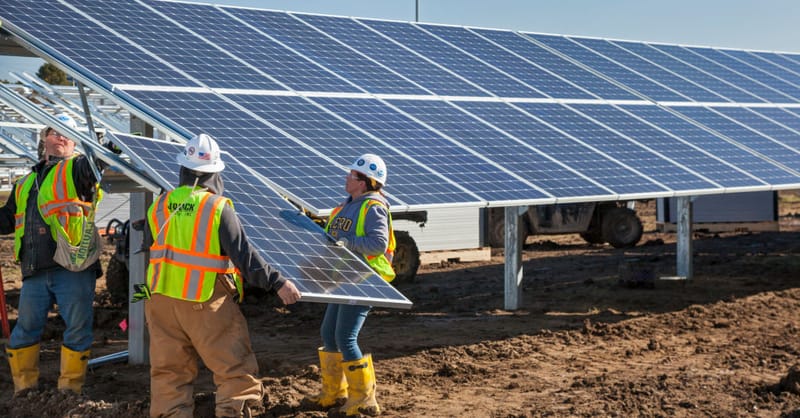
A federal judge has ordered the Trump administration to lift its blockade on new U.S. wind and solar projects. On Tuesday, Chief U.S. District Judge Denise Casper in Boston sided with nine clean energy organizations that sued to stop the federal government’s “arbitrary and capricious” efforts to hinder wind and…
Why it matters: Permitting is now a legal battleground; if your project timeline doesn't factor in administrative stalling, your margins are already in jeopardy.
The Litigious Reality of Modern Infrastructure
When you see a US federal judge label administrative obstruction as 'arbitrary and capricious,' don't just think of it as American political noise. For the European installer, this is a mirror. Whether it’s the permitting bottlenecks in Brandenburg or the legacy grid connection disputes in Greece, the transition is moving from 'engineering challenge' to 'legal endurance test.'
The Hidden Cost of Administrative Inertia
Look at the RED III (Renewable Energy Directive) implementation across the EU. We’ve been promised 'go-to areas' for renewables to fast-track permitting, yet many national regulators are still treating solar applications like they’re proposing a coal-fired plant in a residential zone.
The takeaway? Don’t bet your quarterly margins on the assumption that a permit will be granted on schedule. If you’re quoting a 10MW ground-mount system today, build a six-month 'litigation buffer' into your Gantt chart. If you don't, you’re just gambling with your liquidity. The US case proves that even when the policy is favorable, the bureaucracy will find a way to stall. Protect your balance sheet by assuming the process will be broken until proven otherwise.