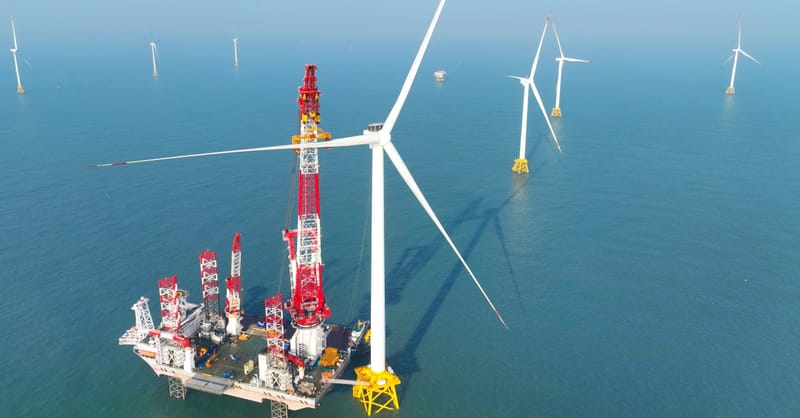
Offshore wind development has all but screeched to a halt in the United States amid the Trump administration’s unrelenting attacks. But in the rest of the world, it’s another story.
Why it matters: Cheap hardware is flooding the market as global wind projects stall — enjoy the lower Capex, but brace for nonexistent manufacturer support.
The Infrastructure Vacuum
The US market's sudden pivot away from offshore wind isn't just a political footnote—it’s a supply chain signal for every European EPC. When the world’s largest economy hits the brakes on massive, multi-gigawatt offshore projects, the global demand for turbine components, specialized subsea cabling, and offshore-grade logistics softens. You might think this is an 'offshore' problem, but look at the labor and grid interconnection market.
The Solar Pivot
The grid infrastructure intended to evacuate all those offshore electrons doesn't just disappear. As US offshore plans evaporate, the focus shifts aggressively toward onshore utility-scale solar and battery storage. For a European installer or developer, this means two things:
We are already seeing this. Look at the current price erosion in Tier-1 bifacial modules—dipping below €0.10/W in some spot markets. While your procurement manager might be celebrating lower Capex, remember the hidden cost: support. When these manufacturers face margin compression, their first response is to slash European customer support teams. I’ve seen it with several Chinese inverter brands operating in the DACH region; when the firmware bug hits a 500kW fleet, the support ticket goes into a black hole because the regional office was the first to be downsized. If you’re banking on these cheap imports to keep your margins healthy, make sure you have the internal engineering bandwidth to fix what the manufacturer no longer will.