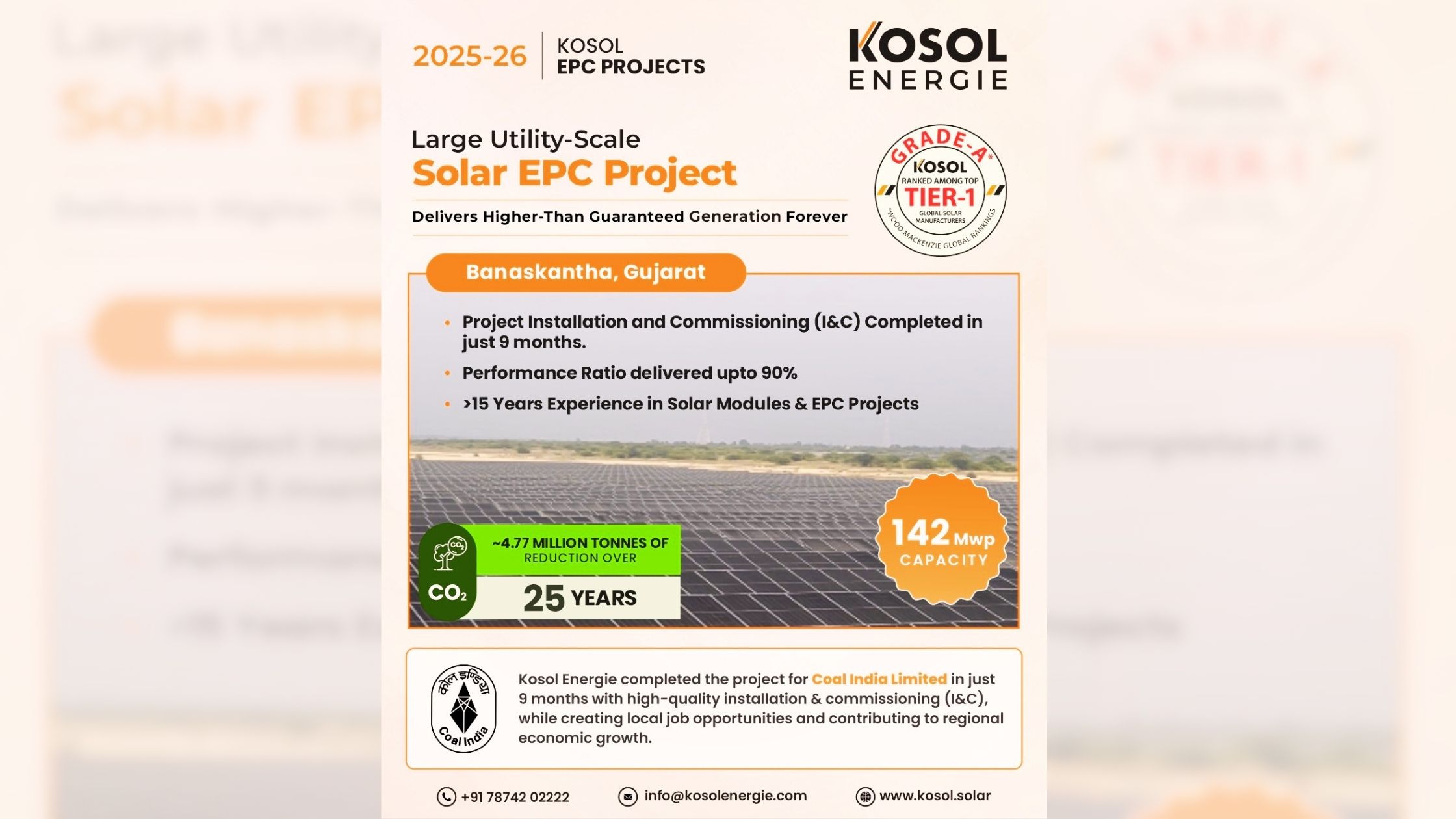
Kosol Energie Pvt. Ltd. has successfully completed a 142 MWp solar project for Coal India Limited in Gujarat, contributing to India's renewable energy goals.
Why it matters: Hardware is now a commodity; your competitive advantage is no longer the module brand, but your ability to navigate the local permitting bureaucracy.
The Brutal Truth About Project Velocity
If you're an EPC in Germany or Italy reading about a 142 MWp project being finished in nine months, don't throw your clipboard. It isn't a lack of effort on your part; it’s a difference in regulatory gravity. In Gujarat, the ability to 'revive' a project and hit COD in under a year suggests a level of state-backed expediting that simply doesn't exist in the EU, where a 100MW+ utility-scale site can spend 24 months just navigating the Federal Network Agency (BNetzA) or local environmental impact assessments.
N-TOPCon: The Commodity Standard
The use of N-TOPCon modules mentioned here is the real takeaway, but not for the reason you think. The tech has hit a total commoditization phase. Whether it's JinkoSolar, Trina, or a regional player like Kosol, the hardware is now the 'easy' part of the project. The price of N-TOPCon cells has cratered to the point where, if your procurement team is still paying a premium for 'high efficiency' as a differentiator, you are bleeding margin.
Don't look to headlines about Indian project completion speeds as a benchmark for your operations. Instead, look at the supply chain logistics. The fact that a 142MW site was finished so quickly confirms that the global supply of N-TOPCon is overflowing. Use that leverage to beat your distributors down on price for your Q3 and Q4 backlog. If they don't budge, find a new supplier.