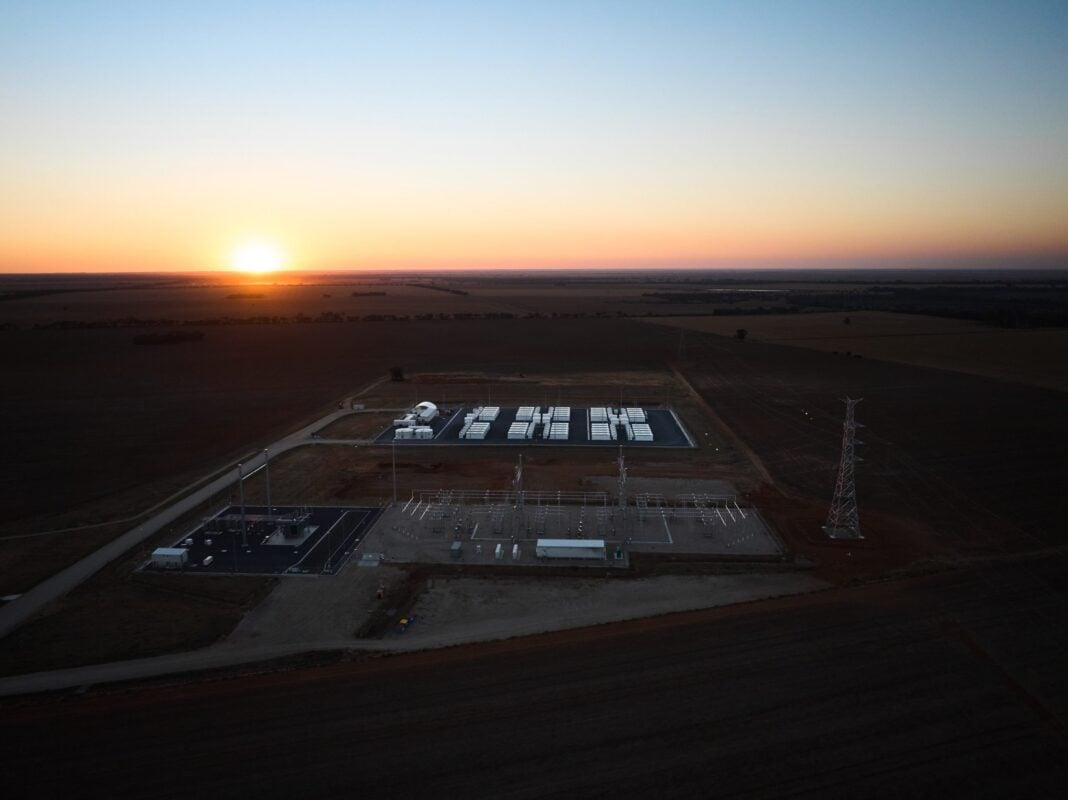
Around 74% of battery storage projects in Australia's NEM pipeline are confirmed to be equipped with grid-forming inverters, says AEMO.
Why it matters: Grid-forming isn't a premium feature anymore; it's becoming the mandatory price of entry for utility-scale and large C&I projects across Europe's decarbonizing grid.
If you think grid-forming (GFM) technology is some niche Aussie experiment, you’re missing the biggest hardware pivot since the move from string to central inverters. Australia’s National Electricity Market (NEM) is effectively a high-speed laboratory for the rest of the world. With 24.5 GW of GFM-capable storage in their pipeline, they aren't just adding capacity; they are replacing the mechanical inertia of dying coal plants with silicon and code.
The End of the 'Grid-Following' Era
For years, European installers have treated inverters as 'grid-followers'—dumb devices that wait for a signal from the grid to sync up. That works fine until the grid gets weak. In parts of Eastern Germany or Southern Italy, where renewable penetration is spiking, we are seeing the same 'system strength' issues that plagued South Australia. The ENTSO-E (European Network of Transmission System Operators) is already watching this closely. We are moving toward a reality where your utility-scale BESS or large C&I project won't get a grid connection agreement unless it can provide synthetic inertia.
Why Your Bill of Materials is About to Change
The Australian data confirms that developers have stopped asking 'if' they need GFM and started asking 'how fast' they can deploy it. For a European EPC, the lesson is clear: Stop viewing BESS as just energy arbitrage. Start selling it as the backbone of grid stability. If you don't understand the difference between droop control and virtual synchronous machine (VSM) modes today, you’ll be disqualified from the lucrative ancillary services tenders of 2026.