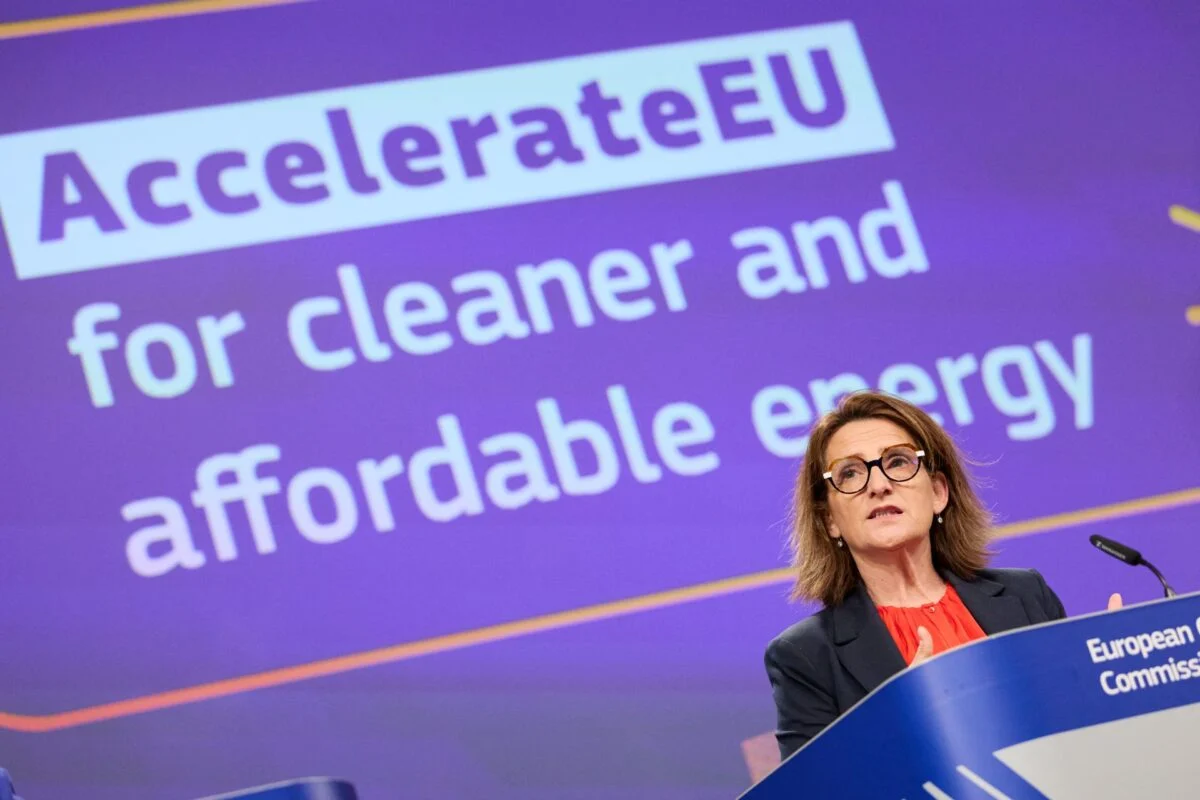
The European Commission (EC) has launched a new strategy to address the fossil fuel energy crisis in the Middle East and accelerate the “shift to homegrown, clean energies”, said EC president Ursula von der Leyen.
Why it matters: Brussels is still treating storage as an optional extra while your projects face the growing threat of grid curtailment and negative pricing.
The Permitting Myth
Brussels loves a good 'toolbox.' It sounds practical, doesn't it? Like something you’d find in the back of a Transporter. But let’s be honest: most of these strategies are just high-level suggestions that get lost in the translation between the Berlaymont and a local grid operator in Brandenburg or Brabant. While Ursula von der Leyen talks about 'homegrown energy' to escape Middle Eastern volatility, the real bottleneck isn't just permitting anymore—it’s the grid’s inability to swallow the solar we’ve already built.
The Cannibalization Crisis
If you’re a developer in Spain or the Netherlands, you don't need a toolbox; you need a floor under your power prices. We’re seeing a record number of hours with negative pricing. In Germany alone, negative prices occurred for over 400 hours in 2023. This 'toolbox' focuses on accelerating deployment but continues to treat storage as a secondary concern. Without a dedicated European Storage Strategy—one with the same teeth as the Net Zero Industry Act—installers are being forced to sell systems that will eventually be curtailed by DSOs (Distribution System Operators) who can't handle the mid-day peak.
The Verdict: This is a political signal, not a technical solution. If you’re waiting for Brussels to make the math work for your next 50MW project, stop. You need to be looking at private PPAs and merchant-plus-storage models now, because this toolbox is missing the most important wrench in the kit.