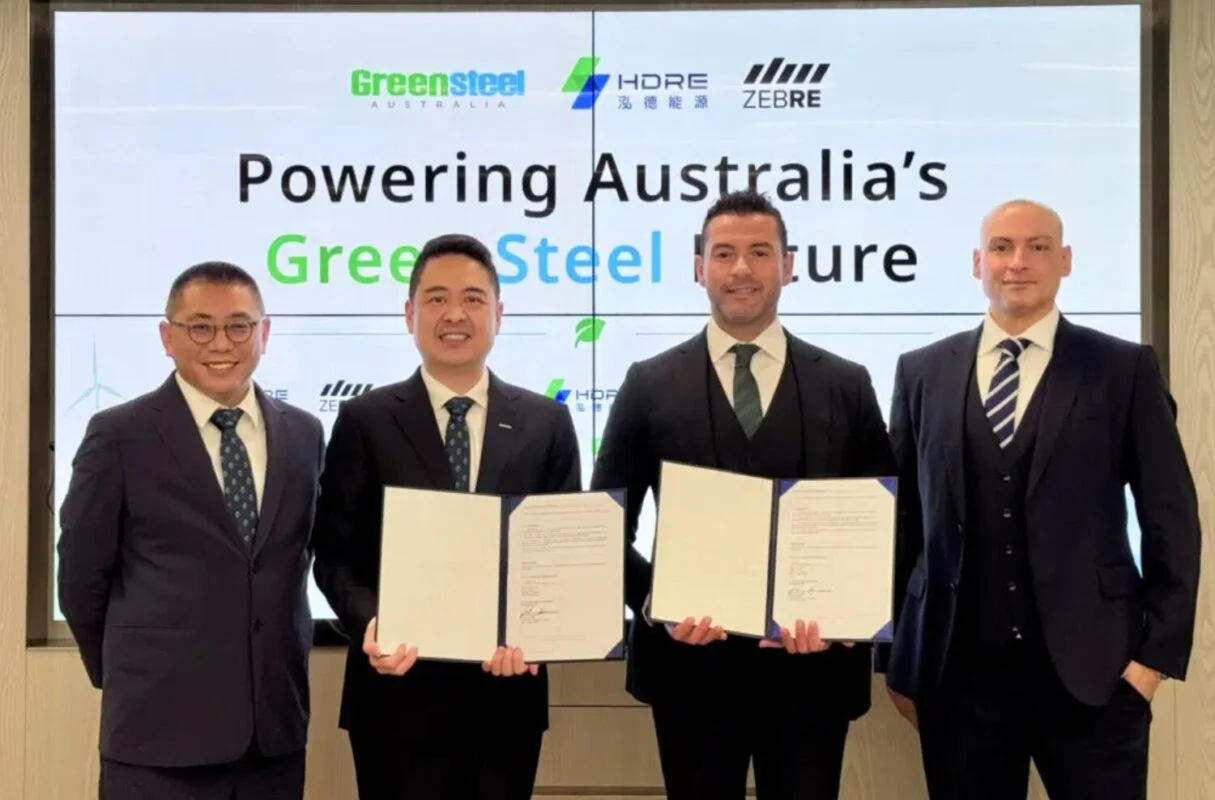
HD Renewable Energy has partnered with Greensteel Australia to establish a long-term renewable energy partnership for green steel production.
Why it matters: Global industrial giants are locking up solar supply chains to bypass EU carbon taxes—expect tighter equipment allocation for mid-market European projects.
On the surface, a Taiwanese developer (HDRE) partnering with an Australian startup for green steel looks like a localized APAC story. Look closer. This is the first wave of a global realignment triggered by the EU’s Carbon Border Adjustment Mechanism (CBAM). By 2026, the free ride for carbon-heavy imports into Europe ends, and the race to secure 'green' molecules is moving from the lab to the iron ore pits.
The Industrial Siphon
For the European EPC or project developer, the threat isn't the steel itself—it’s the hardware siphon. To make green steel viable, you need massive-scale electrolysis powered by low-LCOE solar. We are talking about projects that don't just need a few thousand panels; they require gigawatt-scale deployments of high-string-voltage inverters and 210mm wafer modules. When HDRE pivots to these mega-industrial partnerships, they aren't just selling power; they are locking up supply chains. If you’re trying to source 50MW of Tier-1 modules for a project in Spain or Poland, you are now competing for allocation against industrial consortiums with balance sheets that make traditional utilities look like SMEs.
We’ve seen this pattern before with the first wave of mega-datacenters. Heavy industry is the new 'Big Tech' for solar. If you aren't positioning your business to service the industrial decarbonization of the European 'Mittelstand' or heavy manufacturing hubs, you’re fighting for the scraps of the residential market while the real volume migrates to these industrial giants.