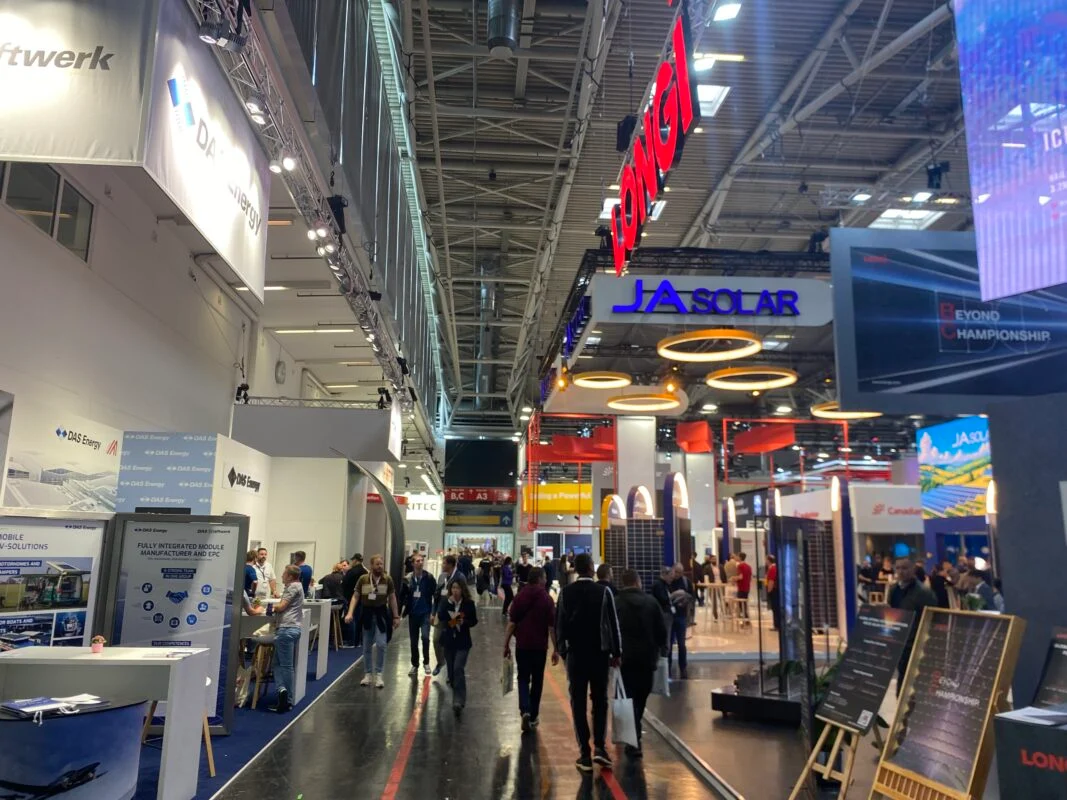
Alex Barrows and Molly Morgan of CRU lay out their predictions for the biggest themes at this year's Intersolar Munich and SNEC conferences.
Why it matters: The price floor for modules hasn't been hit yet—don't lock in massive inventory orders until you see the post-SNEC fallout.
If you are heading to Munich or Shanghai expecting a breakthrough in cell efficiency, save your airfare. We have reached the point of diminishing returns with TOPCon, and HJT is still the 'perpetual next year' technology for anyone actually trying to balance a ledger. The real story at Intersolar this year isn't the hardware—it's the inventory bloodbath and the desperate pivot to BESS integration.
The China-Europe Disconnect
SNEC is where the manufacturing giants like Jinko and Trina signal how much they are willing to overproduce to kill off the competition. Intersolar is where European installers realize that the 'cheap' modules they bought six months ago are now a liability on their balance sheets. We are seeing Tier-1 modules floating around €0.10 to €0.12/Wp. If you’re a developer in Germany or the Netherlands, your technical challenge isn't whether the module is 22.5% or 22.8% efficient; it’s whether your supplier will still be honoring warranties in 2028 when the current price war claims its first major victims.
Survival via Storage
The CRU analysts are right to point toward BESS, but let’s be specific: the 'theme' is software-driven arbitrage. In markets like Belgium or Poland, the simple 'solar + battery' pitch is dead. The conversation has shifted to dynamic tariffs and VPP (Virtual Power Plant) readiness. If a manufacturer’s inverter isn't ISO 15118 compliant for EV integration or doesn't have an open API for third-party aggregators, they are selling you a paperweight. Don't let the shiny booths at Messe München distract you; ask the sales reps about their firmware stability and local support response times. That’s where the real profit leaks happen in a residential rollout.