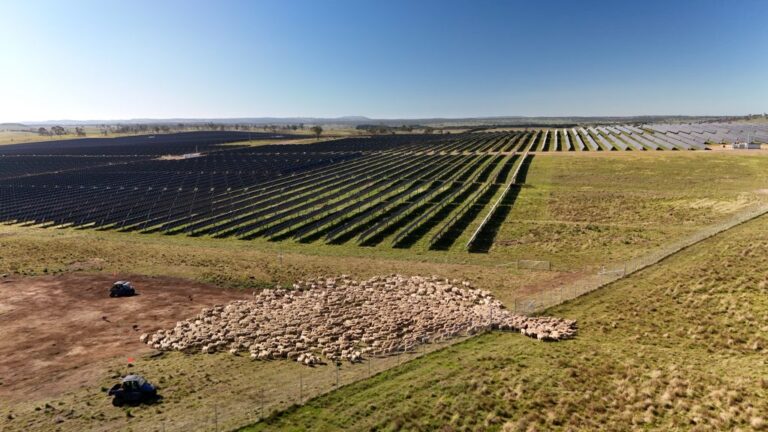
ACEN Australia has revealed an 87% year-on-year increase in generation output for the first quarter of 2026, reaching 528GWh.
Why it matters: ACEN’s massive output spike proves that in congested grids, the winners are those who master grid connection and commissioning, not just those with the biggest pipeline.
When a developer reports an 87% jump in generation, the naive observer assumes it was a particularly sunny quarter. The seasoned EPC lead knows better: this isn't about irradiance, it's about capacity hitting the wire and the brutal management of curtailment. ACEN’s performance in New South Wales (NSW) is the blueprint for what we are starting to face in saturated markets like Spain’s Extremadura or parts of the Netherlands.
The Commissioning Lag is Your Real Enemy
ACEN’s massive leap to 528GWh is largely the result of the 400MW New England Solar farm finally flexing its muscles. In Europe, we’re seeing a similar bottleneck. You can have the best 700W+ N-type TOPCon modules on the planet, but if your Marginal Loss Factors (MLF)—or the European equivalent of grid congestion coefficients—aren't managed, you're just building a very expensive monument to heat. ACEN is winning because they’ve navigated the NEM (National Electricity Market), arguably the world's most temperamental grid, and actually got their electrons to the consumer.
A Lesson for the 'Solar-Only' Crowd
If you are a developer in Germany or Italy thinking you can just keep adding PV capacity without a sophisticated grid-strategy, you’re dreaming. ACEN is succeeding in NSW because they are playing the long game with hybridization and firming. We are moving into an era where 'Generation Output' is a vanity metric; 'Exported Revenue' is the only thing that pays the debt service. To hit these kinds of YoY gains, ACEN had to navigate the exact same supply chain crunches and labor shortages we see in the EU, proving that the 'Australian headache' is just a preview of the European reality.