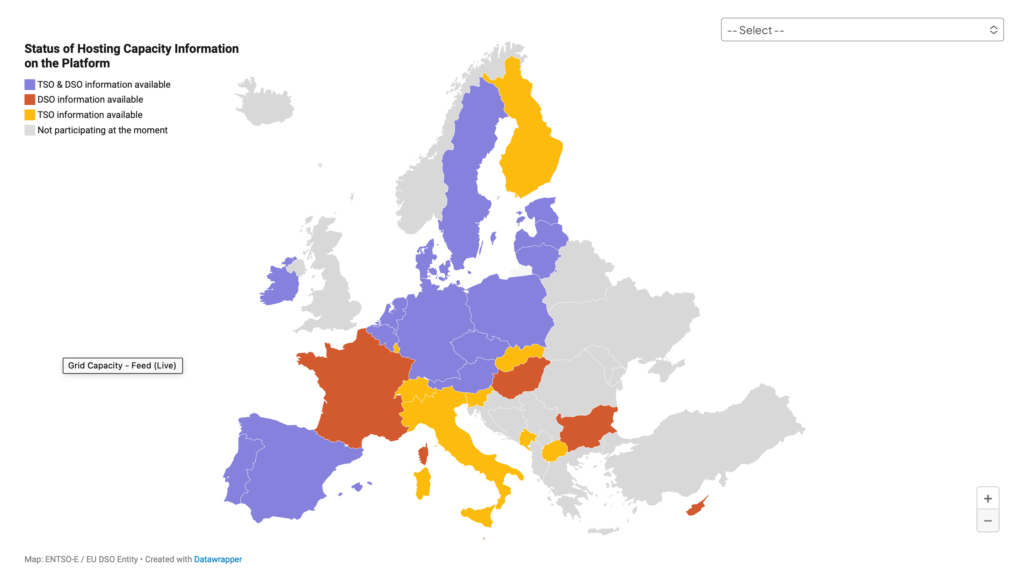
Capacitypedia, una nueva plataforma digital paneuropea diseñada para mejorar la transparencia y el acceso a la información sobre capacidad de alojamiento de las redes eléctricas europeas, tanto de transporte como de distribución.
Why it matters: Stop burning cash on grid applications for saturated nodes; use this data to pivot your pipeline toward regions where the copper can actually take the load.
For years, European PV developers have been flying blind. You find a perfect 20-hectare plot or a massive C&I rooftop, spend €10,000 on preliminary engineering, only to have the DSO (Distribution System Operator) tell you six months later that the local substation is saturated. Capacitypedia is the first real attempt to stop this capital-wasting guessing game by standardizing grid transparency across the EU.
The Death of the 'Insider' Advantage
In markets like Spain and Poland, local knowledge—or knowing the right person at the utility—has often been the only way to gauge where capacity exists. By putting this data on a paneuropean map, the EU is effectively democratizing the 'nudo de conexión'. If you can see that a 110kV line is at 90% capacity before you even sign a land lease, your risk profile changes instantly. This is a direct play to hit the REPowerEU target of 600GWac by 2030; we simply don't have time for the current three-year wait times for grid answers.
A Reality Check on Data Quality
However, let's look at the friction points. The platform is only as good as the reporting from the over 900 DSOs operating in Europe. While TSOs like Amprion or Red Eléctrica are generally digital-ready, smaller regional players often treat grid capacity data like a state secret. For Capacitypedia to be a 'tool' rather than a 'toy,' it needs to move toward the Dynamic Hosting Capacity models we see in parts of the UK. If the data isn't updated weekly, you're still just looking at a historical document of where you used to be able to build.