Grenergy y CATL acuerdan el suministro de 1,5 GWh en España
Why it matters: Storage is no longer an optional add-on; it is the only way to protect your projects from €0/MWh midday price cannibalization.
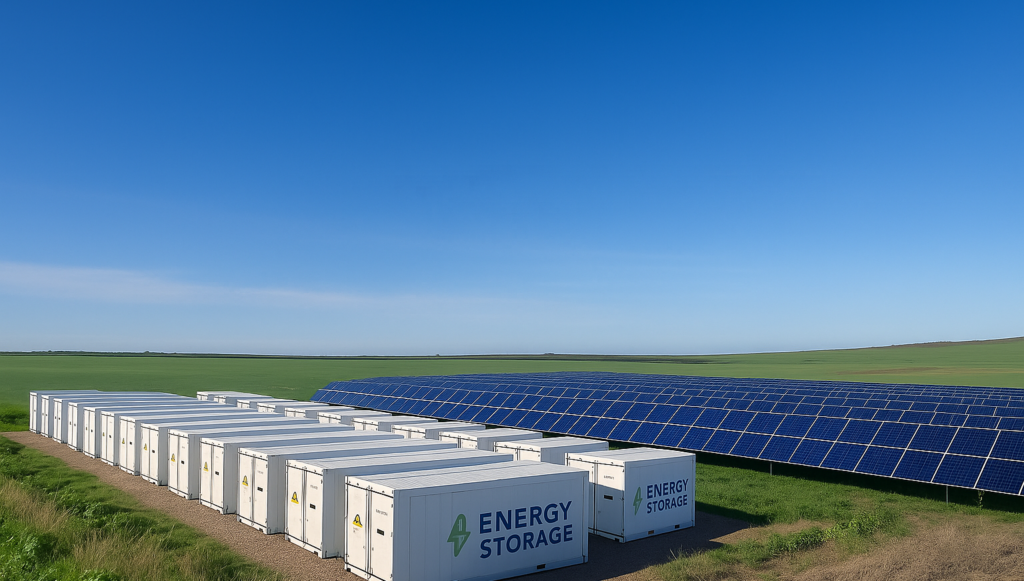
Grenergy y CATL acuerdan el suministro de 1,5 GWh en España
If you’re still pitching pure-play PV projects in Southern Europe without a battery strategy, you’re essentially selling a car without a fuel tank. The news that Grenergy has locked in a massive 1.5 GWh supply deal with CATL for Spanish projects isn't just a procurement win; it’s a survival tactic. We are witnessing the rapid 'Chileanization' of the Spanish market, where solar cannibalization is so aggressive that midday prices hitting zero—or going negative—is no longer a freak occurrence, but a structural feature.
The 1.5 GWh Reality Check
Grenergy is taking the lessons learned from their 'Oasis de Atacama' project and importing that aggressive BESS-first DNA to Spain. For the mid-sized developer, this is the signal to stop over-optimizing for LCOE and start optimizing for time-shifted delivery. A 1.5 GWh commitment suggests Grenergy is moving toward 4-hour duration systems, likely utilizing CATL’s EnerX or EnerD liquid-cooled containers. If your project pipeline in Extremadura or Andalusia doesn't have a BESS component, your PPA bankability is currently bleeding out.
The Italian Pivot and the OEM Land Grab
Meanwhile, Enerside moving 15 MW of BESS into their Italian 62.8 MW portfolio shows the contagion is spreading. While the ratio is still conservative compared to Grenergy, it’s a nod to Italy’s upcoming MACSE (Mechanism for Capacity Procurement of Electricity Storage). Developers in Italy need to stop looking at batteries as a 'nice-to-have' and start seeing them as the only way to satisfy Terna’s increasingly frantic grid stability requirements.
The play for 2024 is clear: build expertise in high-voltage BESS commissioning now, or prepare to be squeezed out by the giants who can afford to buy 1.5 GWh of CATL inventory in a single contract.