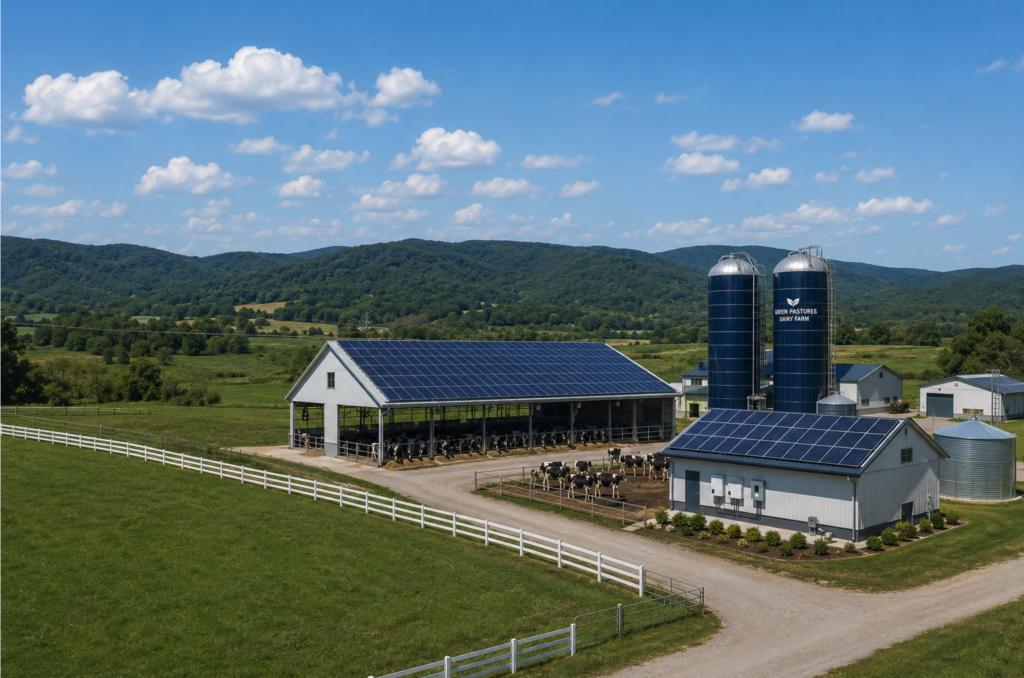
La tensión parásita es una diferencia de potencial eléctrico que puede provocar pequeñas descargas eléctricas al ganado, especialmente a las vacas lecheras, a través de suelos húmedos, equipos metálicos y sistemas de agua, y les causa estrés y reducción de la productividad, e incluso, en algunos casos, la muerte.
Why it matters: One bad grounding job on a farm can wipe out your C&I margins through litigation and kill your reputation in the tight-knit agricultural community.
I’ve seen installers treat a barn roof like a warehouse in an industrial park. Big mistake. In a warehouse, a 2V potential on the chassis is a non-event. In a dairy parlor, that same 2V is a financial catastrophe. We’re talking about animals that are essentially four-legged sensors standing on wet concrete. If your inverter’s leakage current or a poorly bonded mounting structure introduces stray voltage into the watering troughs, the cows stop drinking. When cows stop drinking, milk yield drops—sometimes by 20% overnight.
The Hidden Liability in Your Contract
Most C&I installers in the EU are familiar with IEC 60364-7-712 for PV systems, but they completely ignore IEC 60364-7-705, which specifically governs agricultural premises. This isn't just "best practice"; it's your legal shield. If a farmer sues because their herd's somatic cell count spiked after you commissioned a 100kWp plant, the first thing the forensic engineer will check is your equipotential bonding. Are your DC racks tied to the same reference as the milking robots? If not, you’ve created a giant antenna for electrical noise.
Don't let a "simple" roof-mount turn into a decade-long litigation battle over dead livestock. In Agri-PV, the electrical engineering starts in the dirt, not on the roof. If you aren't measuring the potential between the parlor floor and the water line, you aren't finished with the commission.