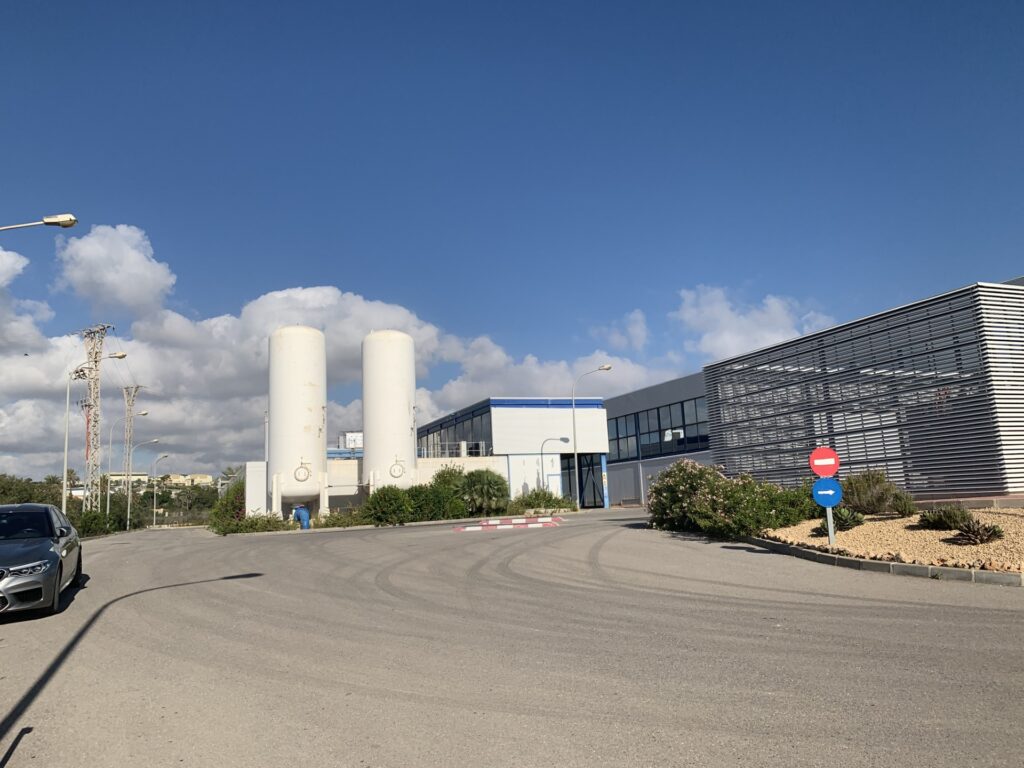
La Mancomunidad de los Canales del Taibilla ha adjudicado a Ingeniería Murciana la redacción del proyecto destinada al autoconsumo de las desaladoras de San Pedro del Pinatar I y II.
Why it matters: Heavy industry is pivoting from buying green certificates to building 50MW self-consumption assets to escape power price volatility.
When we talk about 'industrial self-consumption' in Europe, we’re usually debating whether a 500kW rooftop on a German warehouse is worth the paperwork. This 50MW move by the Mancomunidad de los Canales del Taibilla (MCT) in Murcia moves the goalposts entirely. We are witnessing the birth of utility-scale self-consumption as a survival strategy for energy-intensive infrastructure.
The Math of Water and Light
Desalination is essentially a process of turning electricity into water. With energy accounting for roughly 40% of the operational costs of a desalination plant (averaging 3-4 kWh per m³ of water produced), the MCT isn't building this 50MW plant to 'go green' for a brochure. They are doing it to hedge against the volatile Iberian market prices that spiked to over €200/MWh during the energy crisis. An estimated production of 109,281 MWh annually isn't just a number; it’s a massive buffer against the next gas price spike.
The Corrosion Factor
For the installers and engineers reading this: don't overlook the technical nightmare of a 50MW site sitting next to a desalination plant. You aren't just dealing with high irradiance in Murcia; you’re dealing with C5-M atmospheric corrosivity categories. If Ingeniería Murciana doesn't spec high-grade galvanization or specific aluminum alloys for the mounting systems, and if those inverters don't have top-tier salt-mist protection, that 50MW asset will be a pile of rust in seven years. We've seen 'standard' utility-scale components fail in coastal Almería within three seasons because developers tried to save 4% on the BoS (Balance of System) costs.
A Signal to the C&I Sector
This project proves that the 'behind-the-meter' play is no longer just for SMEs. If you are a developer in Southern Europe, your highest-value targets are no longer just grid-connected IPP projects—which are currently strangled by grid capacity bottlenecks and the 'permitting desert'. The real money is in these massive self-consumption projects where the 'grid' is the client’s own high-voltage substation.