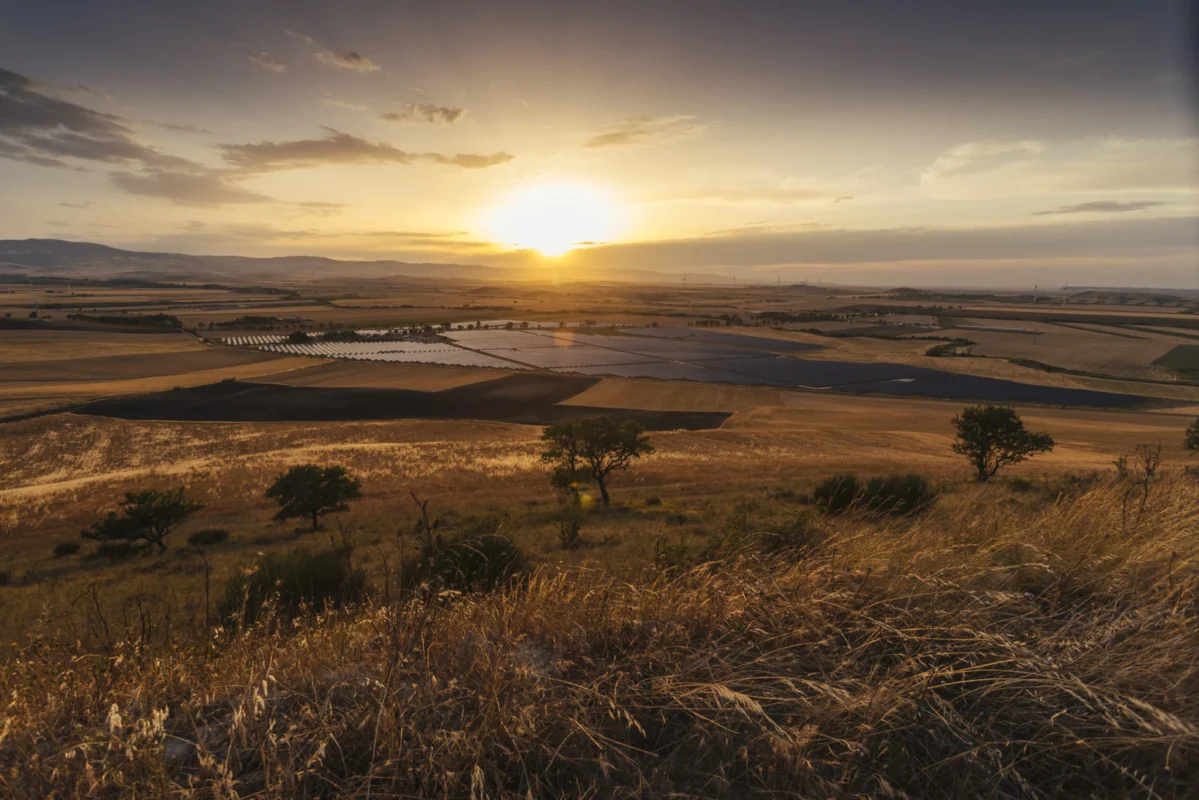
Danish IPP European Energy has started constructing a 225.5MW agrivoltaic solar PV project in Sicily, which it claims will be the “largest” such project in Italy.
Why it matters: Traditional ground-mount is dead in Italy’s productive regions; if you can't master agriPV engineering and permitting, your utility-scale pipeline is worthless.
Let’s cut through the marketing fluff: European Energy isn’t building 225MW of agriPV in Sicily because they have a sudden urge to farm lemons. They’re doing it because, in the wake of Italy’s 'DL Agricoltura' (Agriculture Decree), traditional ground-mounted PV on productive land is effectively a dead man walking. If you want to build at scale in the Italian market today, you either find a rare brownfield site or you embrace the agrivoltaic complexity.
The Permitting Survival Strategy
For years, Italian developers treated agriPV as a boutique niche—a way to get a pilot project funded by PNRR grants. But this 225.5MW project in Sicily signals that the niche has become the mainstream. In Italy, the regulatory wall against 'land consumption' is real. By integrating crop cultivation with solar, European Energy isn't just generating electrons; they are buying political and social license. If you are a developer in Spain or Greece, take note: the Italian model of 'agri-or-nothing' is a regulatory contagion that could easily spread across the Mediterranean.
The CAPEX Penalty vs. The Permit Prize
From an engineering standpoint, this isn't just 'solar with a fence.' To qualify as agriPV under current Italian guidelines, you’re looking at specialized mounting systems—often higher structures or specific tracker algorithms—to ensure enough PAR (Photosynthetically Active Radiation) reaches the ground. This typically adds 20% to 30% to your initial CAPEX compared to a standard utility-scale layout. However, in a market where PPA prices remain relatively robust and land access is the primary bottleneck, that CAPEX premium is simply the cost of entry. If you can't get a permit for a standard 100MW plant, your LCOE is infinite. A 225MW project that actually breaks ground is a win, regardless of the extra steel required.