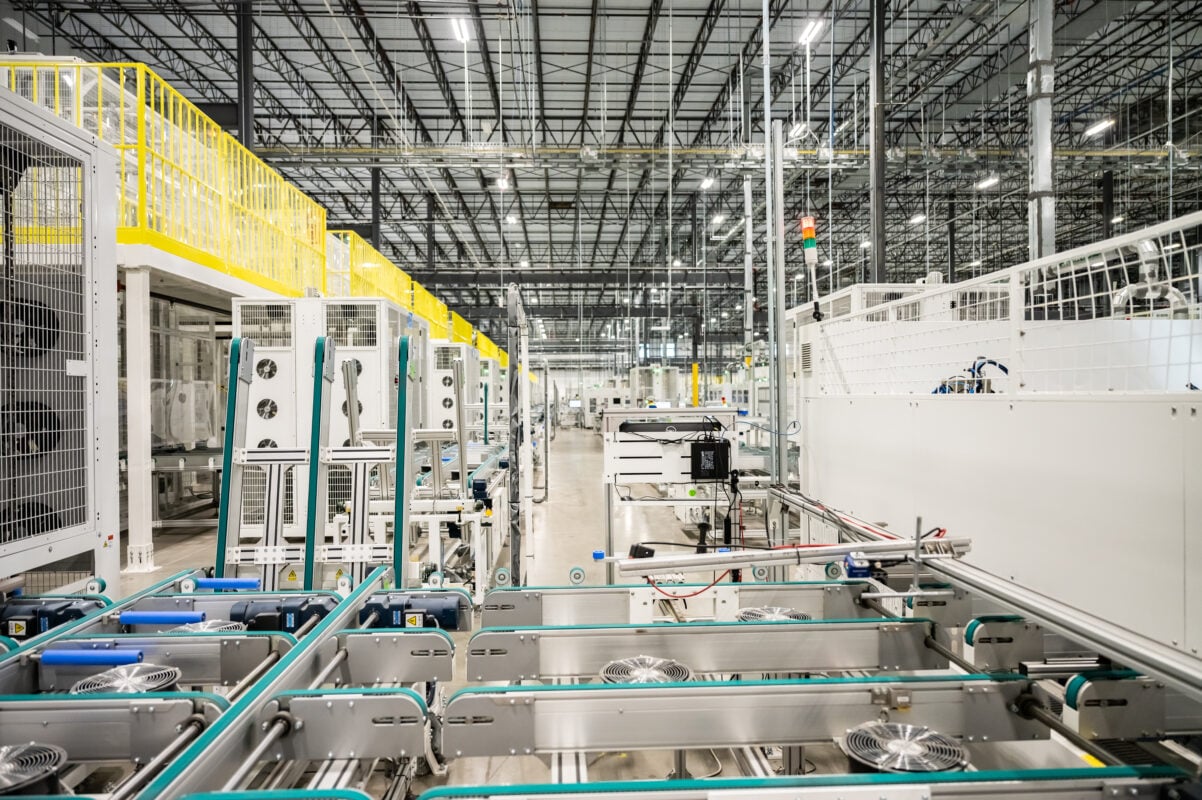
US solar manufacturer T1 Energy has registered a record quarterly net income and adjusted EBITDA in the first quarter of 2026.
Why it matters: The profitability of mid-scale US manufacturing proves that global capital will keep flowing away from the EU until we match the IRA's direct-to-bank subsidy model.
Let’s look past the press release fluff. Producing 683MW in a quarter is a rounding error for the Chinese giants, but T1 Energy’s "record net income" is the data point that should make every European project developer sit up. While European manufacturers like Meyer Burger have spent the last two years fighting for survival or migrating to the States, T1 is proving that the U.S. Inflation Reduction Act (IRA) isn’t just a policy—it’s a margin machine.
The 45X Money Printer
The math is simple and brutal. Under the Section 45X Advanced Manufacturing Production Credit, T1 is likely harvesting roughly $0.07 per watt for integrated module assembly. On a 683MW quarterly output, that’s a potential tax credit windfall of nearly $48 million. For a mid-sized player, that isn't just profit; it’s a subsidized war chest. In Europe, our Net-Zero Industry Act (NZIA) remains a collection of targets and "aspirations" without the cold, hard cash on the barrelhead that T1 is currently enjoying.
What This Means for the EU Supply Chain
The Bottom Line: We are seeing the decoupling of the solar manufacturing world. While we deal with the fallout of the Red Sea logistics nightmare and Chinese oversupply, T1’s balance sheet shows that domestic manufacturing is highly profitable—provided the government writes the checks. For the European installer, this reinforces a hard truth: the "Made in Europe" dream is currently losing the subsidy war to the "Made in USA" reality.