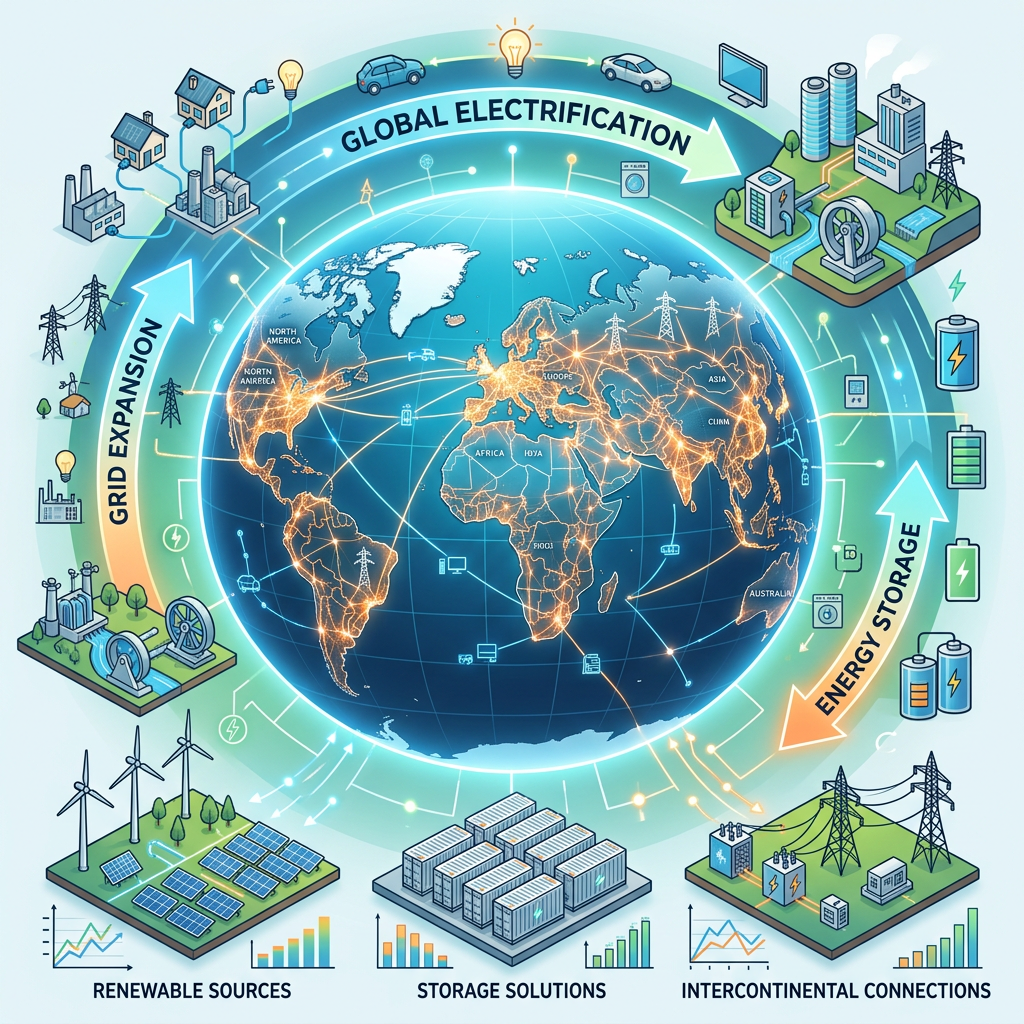
Electrification across sectors is vital, requiring substantial renewable energy capacity growth and doubled investments in grid infrastructure.
Why it matters: The era of easy grid connections is over; your business survival now depends on selling storage and smart energy management to bypass grid bottlenecks.
IRENA is stating the obvious, but for a European installer, the "obvious" is becoming a bottleneck that threatens to kill margins. We’ve spent a decade getting good at slapping modules on roofs and clipping them into the nearest distribution board. That era is ending. If you aren't talking to your clients about Grid-as-a-Service or dynamic load management, you're building obsolescence into your business model.
The Shift from Generation to Management
We are moving from a "generation-first" mindset to a "grid-constrained" strategy. The numbers are staggering: the EU Commission estimates that €584 billion in grid investment is needed by 2030. For a developer in the Netherlands or Germany, this isn't just a macro-statistic; it’s the reason your 1MW commercial project is currently facing a 36-month wait time for a connection agreement. To survive, you have to stop waiting for the DSO to upgrade the copper and start using technology to bypass the bottleneck.
The smart money in Europe is no longer chasing the lowest price per watt-peak. It’s chasing the highest level of energy autonomy. Stop being a solar installer and start being a private utility builder.