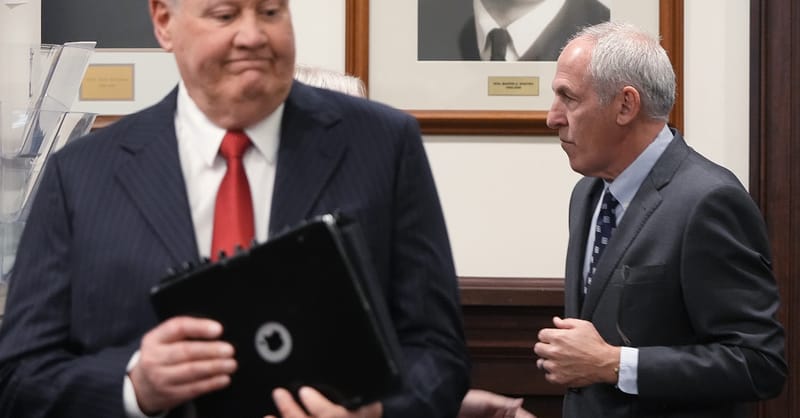
Now, they’re set to stand trial for a second time on the same state criminal charges related to Ohio’s House Bill 6 utility corruption scandal.
Why it matters: Corruption in utility boardrooms kills solar pipelines faster than high interest rates ever could.
If you think the Ohio FirstEnergy scandal is just a "crazy American story," you’re missing the blueprint for how incumbents strangle your pipeline. House Bill 6 (HB6) wasn’t just a bribe; it was a targeted assassination of Ohio’s Renewable Portfolio Standard (RPS). By funneling $60 million into a dark money scheme, FirstEnergy secured a $1 billion bailout for aging coal and nuclear assets while effectively making solar development in the state a bureaucratic nightmare.
The 'Regulatory Capture' Playbook
For a developer in the Netherlands or Poland, the lesson is clear: Grid parity is meaningless if the utility owns the regulator. We’ve seen shades of this in Europe—think of the 'sun tax' in Spain that haunted the industry for years or the current grid congestion games played by some DSOs in Germany. When a utility’s legacy assets are threatened by decentralized PV, they don't always compete on technology; they compete on legislation.
The mistrial prolongs the uncertainty, but the damage is done. Ohio’s renewable growth slowed to a crawl compared to neighbors like Illinois. For European installers, this is a reminder that your biggest competitor isn't the guy down the street undercutting your price—it's the utility lobbyist in Brussels or Berlin who wants to ensure your 'excess' solar never touches their grid without a massive fee.